6 BEAUTIFUL DESTINATIONS YOU MUST CHECK IN SIEM REAP
Siem Reap is a province of Cambodia. It borders the provinces of Oddar Meanchey to the north, Preah Vihear and Kampong Thom to the east, Battambang to the south, and Banteay Meanchey to the west. Its capital and largest city is Siem Reap. Siem Reap is the 10th largest province in Cambodia. With a population of 896,309, it ranks as the 6th largest in the nation. A large portion of Siem Reap’s southern border is demarcated by the Tonle Sap and as such, it is one of the nine provinces that making up the Tonle Sap Biosphere Reserve. In modern times the province is best known as the site of Angkor and the Angkor Wat temple ruins.1.ANGKOR WAT
- Distance: 6 kms from Siem Reap centre
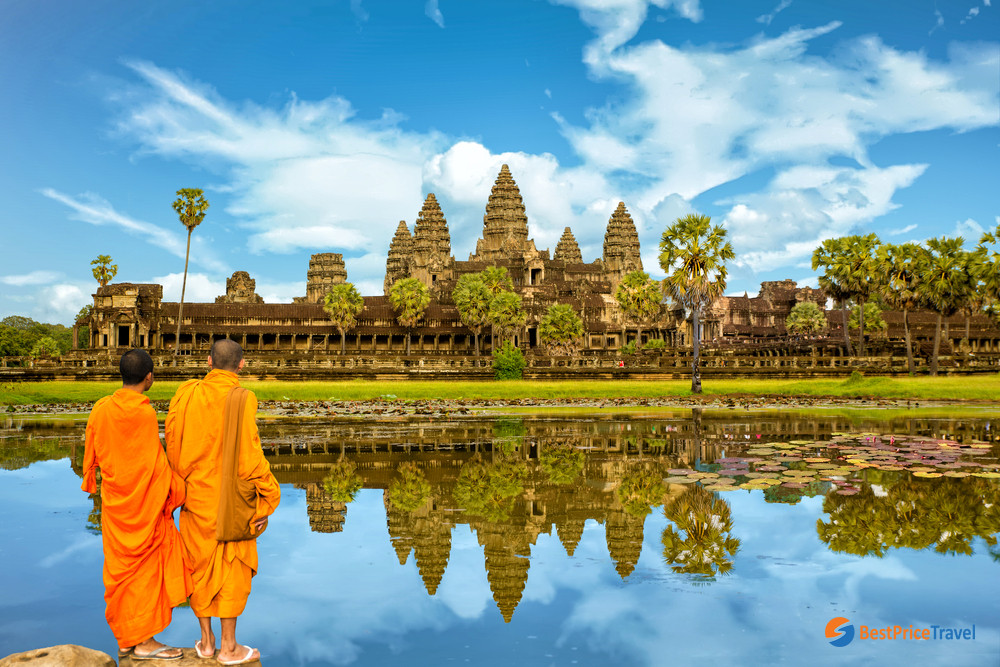
In addition to its enormous size, Angkor Wat’s structure is also covered in intricate stone detailing throughout its entirety. Visitors are advised to wear modest clothing, be respectful to the monks that visit frequently and to not sit on the structures.
2.ANGKOR THOM
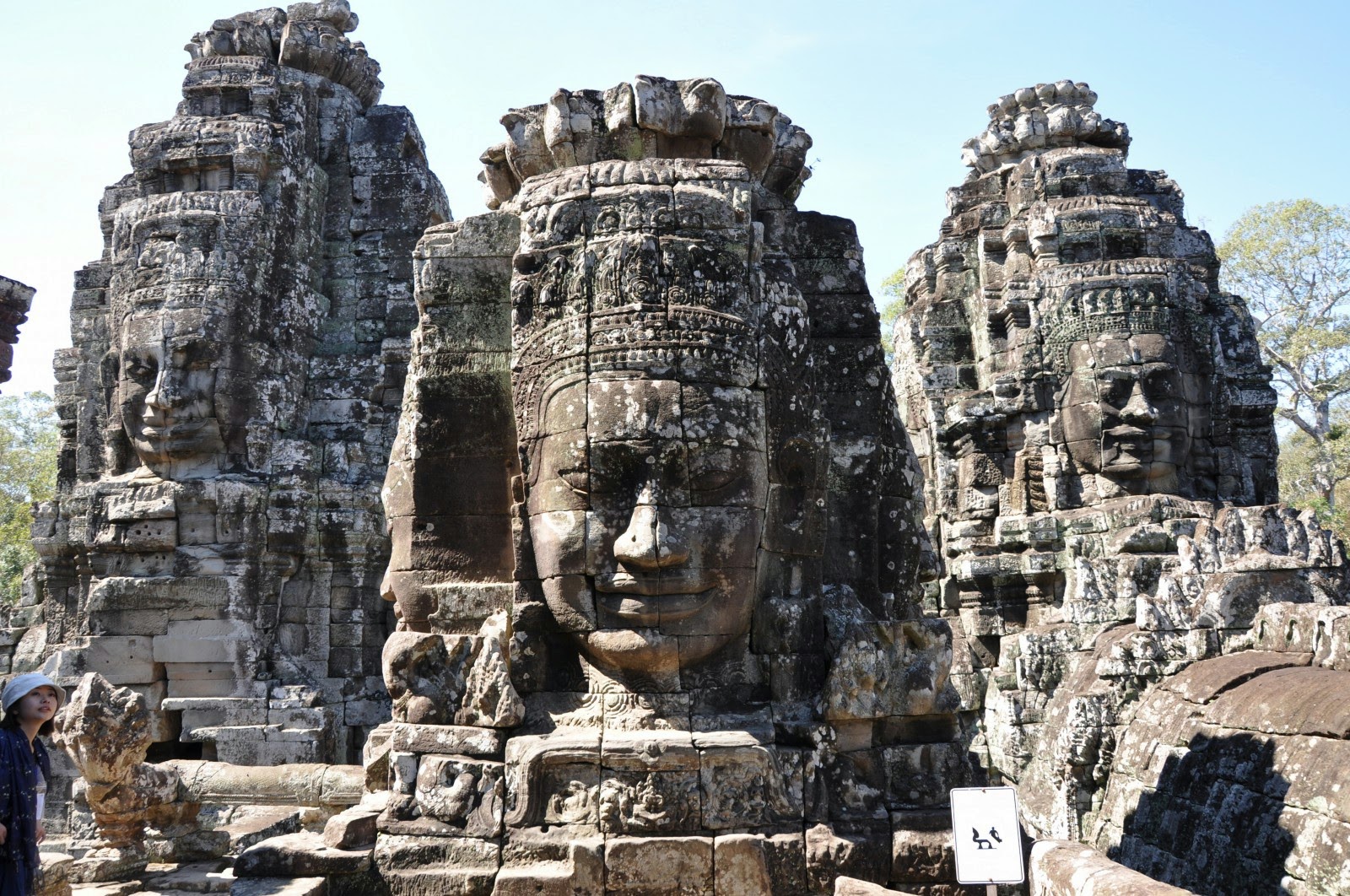
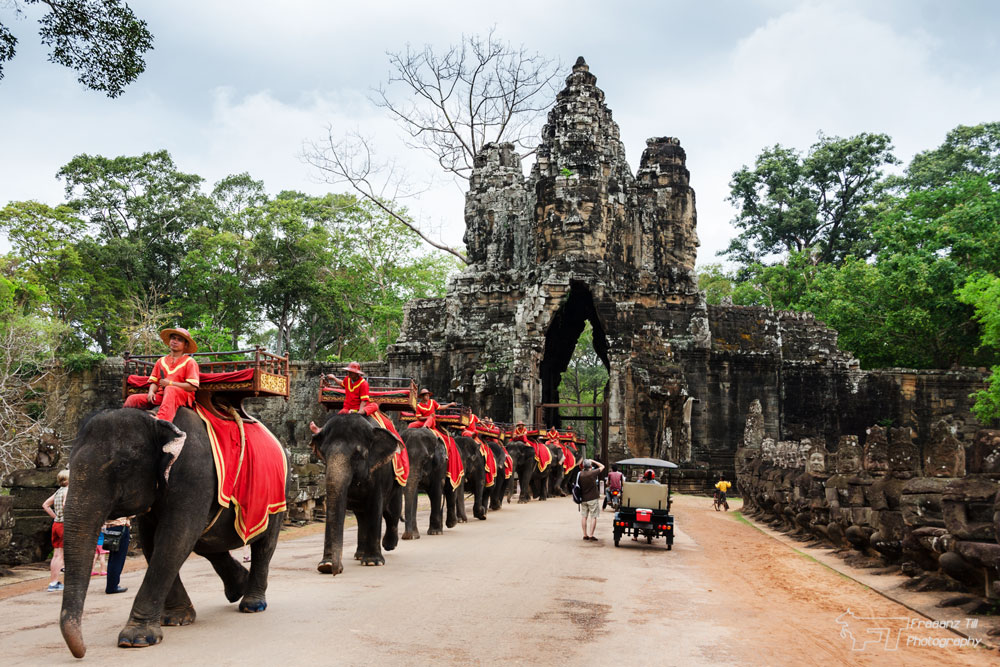
- Distance: 10 kilometers from Siem Reap
3.TA PROHM
- Distance: Ta Prohm lies about 8 miles (13 kilometers) north of Siem Reap, within the Angkor Archaeological Park, about a 1-mile (1.5-kilometer) walk from Banteay Kdei and a bit farther from Srah Srang.
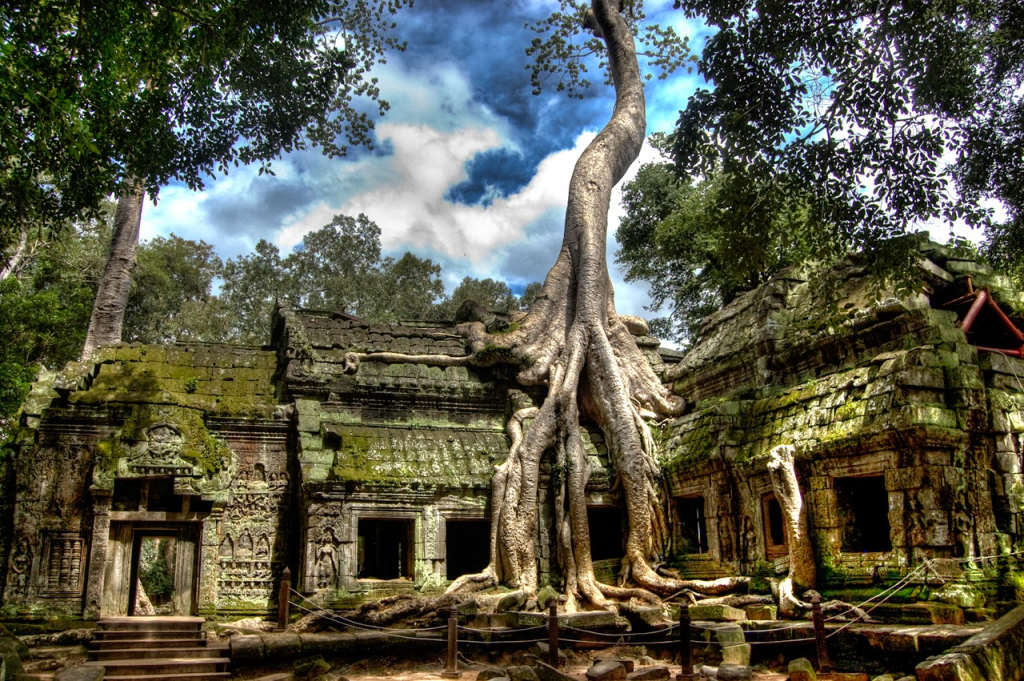
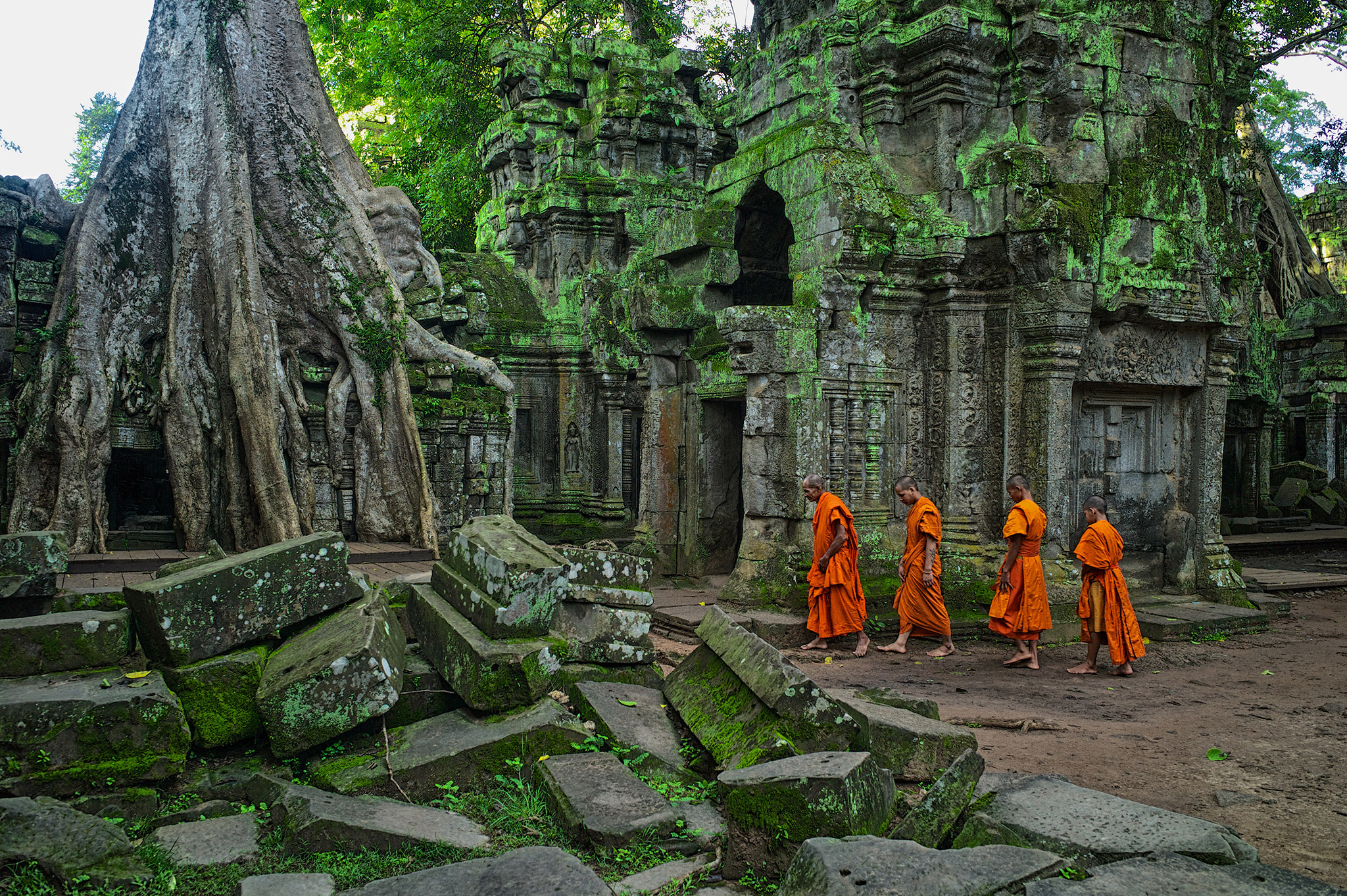
The temple was built some 1,000 years ago, and it is almost completely immersed in nature, as the forest continues to grow straight into the Ta Prohm. This has been incredibly damaging to its original infrastructure, and it is currently being restored by the Archaeological Survey of India.
4.TONLE SAP LAKE
- Distance: The lake located about 15 km south of Siem Reap town
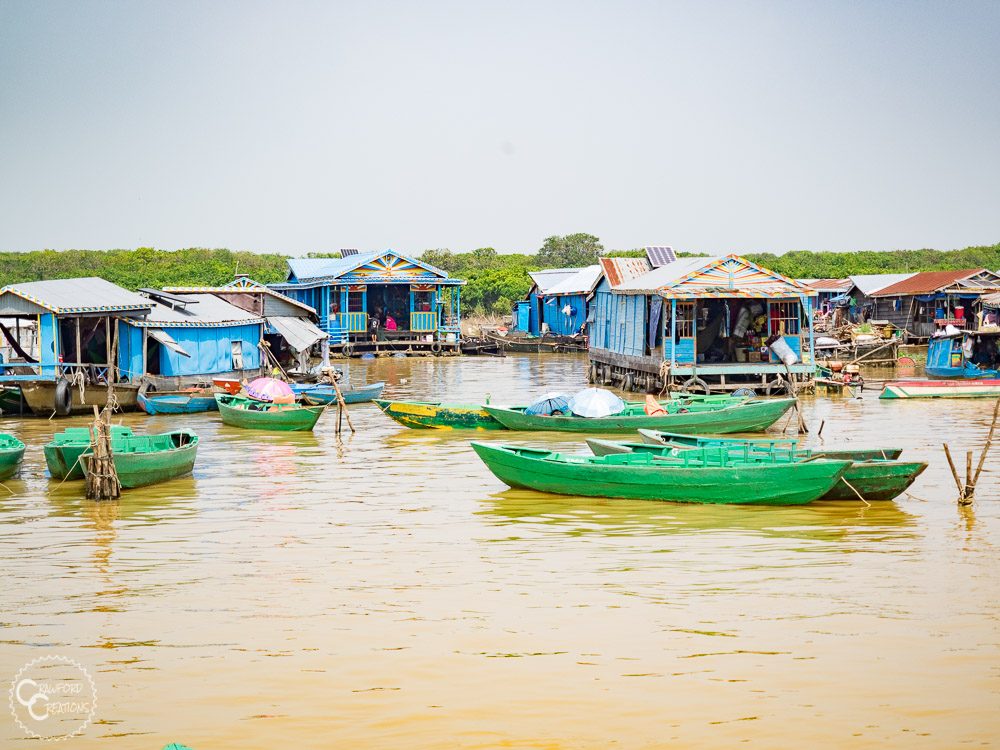
It’s actually the largest lake in Southeast Asia and one of Cambodia’s most important landmarks.
The Tonle Sap is home to around 1.2 million people who make their living by fishing in and around the lake. And those fisheries, they make up 16% of Cambodia’s GDP (gross domestic product).
More than three million people call the banks of Tonlé Sap home. Many Cambodians make their living here by fishing on the water. The lake is one of the largest bodies of freshwater in all of Asia. Visitors can get a glimpse of a variety of wild birds as well as turtles and maybe even a crocodile or two at this lake.
5.ANGKOR NATIONAL MUSEUM
- Distance: just 1 km from Siem Reap
Gallery 1: 1,000 Buddha Images
This is the only gallery that’s just one large room, rather than a series of maze-like alcoves, and the sight of all these Buddhas at once is striking. Hundreds of small and miniature Buddha figurines, made of metals, jewels and wood, all individually illuminated, line the walls here, identified according to the period they were made during and where they were discovered. In the centre, life-size and larger Buddha characters are displayed. The display includes Buddhas from Banteay Kdei, Bayon, Angkor Wat and Preah Vihear.
Gallery 2: Pre-Angkor Period: Khmer Civilisation
This gallery and all the subsequent ones combine mural-size explanations and short films through maze-like rooms explaining Angkorian history. The styles of figurines precede the trademark Angkor style, and there’s a large collection of lingas, lintels and colonnettes.
Gallery 3: Religion and Beliefs
This room explains several of the most significant Hindu and Buddhist religious stories and folk tales depicted on Angkorian temples, including the most memorable Churning of the Sea of Milk carved into the rear wall at Angkor Wat. Carvings of Buddhist and Hindu religious figures are concentrated here as well.
Gallery 4: The Great Khmer Kings
The gallery focuses on King Jayavarman II, Yasovarman I, Soryavarman II and Jayavarman VII, those most responsible for Angkor’s greatest constructions. Figures of the kings and relics from the temples they commissioned abound.
Gallery 5: Angkor Wat
There’s a large film gallery inside this section of the museum. It features beautiful, panoramic images of the temple and explanations of how it was constructed. There are also many restored figures from the temple itself as well as post-Angkorian wooden statues used for worship at the temple until several hundred years ago.
Gallery 6: Angkor Thom
In addition to recovered artefacts from Angkor Thom, this gallery includes a history of and artefacts from the vast irrigation projects commissioned by the king who built Angkor Thom with his smiling face looking out from every tower: Jayavarman VII.
Gallery 7: Story From Stones
This room is one of the most interesting. It’s a collection of stone pallets with ancient Khmer and Sanskrit inscriptions. The writing on each slate is explained on placards below. The writing on them includes the declaration of the construction of a new hospital, lists of slave names, mediations of land disputes and adulations of kings and gods.
Gallery 8: Ancient Costume
From Apsaras and kings to princesses and warriors, this room contains the busts and statues of distinct fashions and styles as they evolved throughout Angkor time. There’s also a collection of ancient jewellery and headdresses. It’s a clever segue to the final room — the gift shop — where upscale imitations of these fashions abound.
It’s $12 to enter the museum, plus another $3 if you want to bring in your camera and another $3 for an educational headset.
Find out everything you need to know about the Khmer empire at the Angkor National Museum. It is here visitors will find a wide variety of historical artifacts and a souvenir shop. The museum is open April through September from 8:30 a.m. to 6 p.m. and October through March from 8:30 a.m. to 6:30 p.m.
6.BANTEAY SREI
- Distance: Banteay Srei is about 32km northeast of Siem Reap and 21km northeast of Bayon
Banteay Srei is one of the few temples around Angkor to be commissioned not by a king but by a Brahman, who may have been a tutor to Jayavarman V. The temple is square and has entrances at the east and west, with the east approached by a causeway. Of interest are the lavishly decorated libraries and the three central towers, which are decorated with male and female divinities and beautiful filigree relief work.
Classic carvings at Banteay Srei include delicate women with lotus flowers in hand and traditional skirts clearly visible, as well as breathtaking recreations of scenes from the epic Ramayana adorning the library pediments (carved inlays above a lintel). However, the sum of the parts is no greater than the whole – almost every inch of these interior buildings is covered in decoration. Standing watch over such perfect creations are the mythical guardians, all of which are copies of originals stored in the National Museum.
ALL THINGS YOU SHOULD KNOW BEFORE TRAVELLING TO SIEM REAP
Each country is endowed with its own unique history, culture and identity. Cambodia, albeit its relatively small size, is home to one of the most well-known wonders of the world, Angkor Wat. The temple, with its meticulously crafted wall of artworks and majestic splendor, wows and enamors tourists far and wide. To satisfy your presumably aroused curiosity and help you plan your itinerary in Cambodia, here are important things to know before visiting Siem Reap.SIEM REAP HISTORY
Very little is known about the history of Siem Reap. There are few written sources available for reference. Following the era of the Khmer empire, Cambodia was invaded multiple times by Thailand, and for many years Thailand held suzerainty over Cambodia. The history of Siem Reap is closely linked to Cambodia’s battle for control over its territory.
A popular story of Siem Reap’s history centers around King Ang Chan, who ruled Cambodia in the 16th century. King Ang Chan was forced to flee to Thailand (an area then referred to as “Siam”) when his brother usurped the throne. When in Thailand, the Thai King Maha Chakrapat refused Ang Chan permission to return to Cambodia and reclaim his throne. Ang Chan tricked Maha Chakrapat into giving him permission by promising he would hunt and capture a magnificent white elephant that the Thai King had heard about. Ang Chan returned to Cambodia, raised an army and took back the throne. When the Thai King demanded the sought-after white elephant, Ang Chan refused, ending the spell of suzerainty. Maha Chakrapat invaded but Ang Chan defeated the 10,000-strong Thai army. He named the area of the victory “Siem Reap” which means the “flat defeat of Siam”.
French Protectorate
From the 16th to 19th century, Cambodia suffered a period of decline known as the “dark ages” of Cambodia when much territory was lost to their neighbors Thailand and Vietnam. It was not until King Norodom negotiated a treaty with the persuasive French that Cambodia began to retain some of its lands. Siem Reap suffered an uncertain fate however, as the French continued to both battle and negotiate with Thailand and Vietnam for some years. Siem Reap, along with Battambang and Sisophon were under Siamese administration known as Inner Cambodia from 1795 till 1907 until the province was finally ceded to French Indochina.
Rediscovering Angkor
The French rediscovery of the Angkor temples played an important role in freeing the province and city from Thailand. In 1901 the École Française d’Extrême Orient (EFEO) began their long relationship with Angkor by funding an expedition into Siam to the Bayon. The EFEO cleared and restored the whole site, and rediscovered many of the surrounding temples. In the same year, the first tourists arrived in Angkor – an unprecedented 200 of them in three months. Up until this point, what the world now knows as “Siem Reap city” was little more than a small rural village near the Tonle Sap Lake. However with the French discovery, Angkor had been ‘rescued’ from the jungle and was assuming its place in the modern world.
The historical interest of the area, and its potential for development, encouraged the French to invest time and energy in Siem Reap. The popularity of Angkor Wat and the opening of the first hotel, The Grand Hotel d’Angkor in 1929, stimulated tourism in the area. The French influence is still felt today in Siem Reap in the French-colonial architecture in the city center and the high proportion of French business investment and sizeable expatriate community.
Period of the Khmer Rouge
World War II and the complicated period of the Vietnam War with the US had a destabilizing effect on the entire region, and Cambodia’s then King Norodom Sihanouk used this situation to gain independence from the French in 1953. There followed a period of relative prosperity for Siem Reap and Cambodia as a whole, until Sihanouk was deposed in 1970. The Lon Nol government however was erratic and his control over the country waned, giving strength to the Khmer Rouge cause.
When the Khmer Rouge seized power, they closed the country off to all foreign influence and drove urban populations to the countryside to create an agricultural peasant society. The majority of the educated people was tortured, killed or fled the country. The Khmer rouge destroyed the idea of money and currency so the economy completely collapsed. It is estimated that around 2 million people were killed under the Khmer Rouge regime due to their disastrous social engineering policies and mass executions.
1979 – 1999
The Khmer Rouge regime fell in 1979 when Vietnam invaded, backed by a number of dissatisfied former Khmer Rouge leaders. However, peace time was still long in coming as Khmer Rouge forces kept the country locked in civil war for another 2 decades. Siem Reap was one of the last areas of the country to experience peace, as many areas in the north and North West of the country were Khmer Rouge strongholds. However by 1999, following some intense in-fighting between the remaining Khmer Rouge leaders, and Pol Pot’s death, most of the members surrendered or were captured and the party effectively ceased to exist.
21st century Siem Reap
Considering that peace time is a relatively recent, Siem Reap has recovered remarkably quickly, and in less than 15 years has built up its tourism numbers to over 2 million per year. Cambodia has rebranded itself “The Kingdom of Wonder” using the outline of Angkor Wat as its logo
SIEM REAP CULTURE
As you’d expect from a civilization that built the Angkor temples, the Khmer Empire was artistically rich, with talented sculptors, artists, dancers, and musicians. Art and sculpture are on display in the elaborate carvings and bas-reliefs on the temple walls and at Angkor National Museum. Nightly Apsara dance performances, accompanied by classical Khmer musicians, are held at dozens of venues around the city. Wat Bo Pagoda is the location of twice-weekly shows of traditional shadow puppetry and musical ensembles, while the Bambu Stage showcases contemporary dance and the big top behind the Museum is home to nightly performances by the quirky Phare Cambodian Circus.
The biggest party of the year for Cambodians is Khmer New Year, celebrated around the same time as Thailand’s Songkran, though less about water fights and more about pagoda activities such as making offerings to the monks, worshipping ancestors, and washing Buddha statues. While the main holiday lasts over three days, Cambodians will take a week to 10 days off if they are able to return to their hometowns. In Siem Reap, it’s the only time of year that Pub Street and Angkor Archaeological Park teem with groups of Cambodian friends and families. Traditional games, dancing, and concerts take place around the park, including in front of Angkor Wat. It’s a wonderful time to visit.
TRANSPORTATION
The majority of visitors to Siem Reap arrive by air from Phnom Penh and Bangkok. There are also regular flights from Singapore, Ho Chi Minh City and Vientiane. Visas are available on arrival at the Siem Reap and Phnom Penh airports. From Phnom Penh, there are also daily boats and buses/vans going to Siem Reap. Some visitors make their way to Siem Reap overland from Thailand via the Aranyaprathet/Poipet border crossing.
Siem Reap Arrival and Departure
Airport Departure and Arrival Tax:
Siem Reap Airport: The airport sits 6km from town, close to the temples, occasionally affording spectacular views of Angkor Wat during landings and take offs. Outside the terminal is a ticket booth for registered taxis into town. Independent taxis and motorcycles wait just outside the airport. The price is the same for both: motorcycles are $2 and cars are $6-7 into town. Most hotels offer free transportation from the airport but you must notify them in advance of your arrival.
Siem Reap Ferry Dock
The ferry to Siem Reap arrives at Chong Khneas near Phnom Krom, 12km south of Siem Reap. The ticket price costs from 35us$. There is always transportation waiting at the dock. Mototaxis charge about $2-$3 and cars $6-$7 for the 20-30 minute ride into town.
Airs
Cambodia Angkor Airways offer several daily flights to/from Phnom Penh, another cheap opportunity is Bassaca Air or Bayon Airlines. Vietnam Airline also offer daily flight to/from Ho Chi Minh city and Hanoi, Singapore Airlines to/from Singapore and Loas Airlines to/from Luang Prabang.
River Ferry
Daily ferries ply the Tonle Sap river and lake between Phnom Penh and Siem Reap. The end of the trip is marked by a hill, Phnom Krom, near the ferry dock at Chong Khneas 12 km south of Siem Reap. During the dry season, the ferry stops short of the dock and passengers transfer to smaller boats to traverse the final few hundred meters.
Ferries depart 7am daily from the Phnom Penh Port on Sisowath Quay. Ferries depart Siem Reap daily at 7am from the dock at Chong Khneas. Passage is around $18-$25 and should be purchased a day in advance (251km, 4-6 hours). Drinks are sometimes available. Tickets can be purchased through hotels and travel agencies cheaper than at the ferry offices. Though generally safe, these ferries are local transport and have experienced breakdowns, groundings and other difficulties. Travel is best during the wet season (June-November). Dry season low waters can mean smaller, less comfortable boats and occasional groundings.
Compagnie Fluevial Du Mekong offers very leisurely paced boat trips between Phnom Penh and Siem Reap on a traditionally crafted wooden riverboat with deluxe facilities. 3-day excursions.
Buses or Vans
There are many Bus companies like Giant Ibis, Mekong Express, PSD Xpress, Sorya Bus, Neak Krohorm, Thero Express (15-seat), Larryta, KSO, Virak Buntham, Kampot Express, Cambodia Post VIP Van offering bus/van services to Siem Reap town using modern air-conditioned buses/vans. Buses/vans depart every 15 minutes to one hour, daily from 6am-12pm mid night. The prices are reasonable. Online Bus ticket can be purchased in advance.
Share/Private Taxis
Local share taxi depart from southwest corner of Central Market in Phnom Penh for 25,000 riel per person (5-8 hours). A private taxi costs you US$38-$45 for the whole car. 5-6 hours. (Due to rising fuel costs, prices are in flux.). Private taxi is also available in Siem Reap, and you can check with any travel agents or hotels to arrange for you. Now very easy, you can book Private Taxi before your arrival through online.
Motorbike Info to Siem Reap
The road to Siem Reap is in good condition, but driving in Cambodia is still challenging in the extreme, and should be attempted only by experienced riders. Speeding taxis, slow cows, and oblivious children are the norm. The trip calls for a dirt or road bike, no smaller than 250cc. It can be made in a day, but two days with a layover in Kampong Thom is a more relaxed alternative and allows time to visit the pre-Angkorian ruins of Sambor Prei Kuk.
Leave Phnom Penh via the Japanese Bridge and follow National Highway No 6 north 75km to the Skun intersection. (Skun is known for its exotic foods – check out the fried spiders, turtle eggs and more at the roadside stands.) Bear left and follow the NH No 6 to Kampong Thom – about 2-3 hours. In Kampong Thom, the Arunras Hotel (062-961294), Stung Sen Royal Hotel (012-309495) and Mitttapheap Hotel are all decent mid-range places. Arunras Guesthouses and Restaurant next to the hotel is the place to eat cheaply. From Kampong Thom to Siem Reap the trip takes another 2-3 hours.
THE BEST THINGS TO SEE AND DO
Visiting Angkor Wat Complex
Seeing the sunrise at Angkor Wat
Visit floating village
Take a trip to Phnom Kulen National Park
Take a cooking class
Dinner with Aspara dance performance
Go to Phrase circus
Massage in Sieam Reap
Enjoy Siem Reap bustling nightlife
HOW TO GET AROUND SIEM REAP
As the gateway to Angkor Archaeological Park, one of Asia’s star attractions and Cambodia’s main tourist destination, Siem Reap’s international airport is busy, with frequent flights arriving from around Asia. The petite airport is not equipped to handle large long-haul flights, so you’ll likely fly via Bangkok, Singapore, Kuala Lumpur, or any number of Asian capitals, before transferring to a smaller jet. This means you can take advantage of low-cost airlines like Air Asia. If traveling overland, good bus services exist between Hanoi and the Cambodian capital Phnom Penh (5 hours) and from there to Siem Reap (7-8 hours), and from Bangkok via the border town of Poipet to Siem Reap (8-9 hours). It’s also possible to take a train from Bangkok and then a bus from the border.
Taxis (US$7) or tuk-tuks ($6), pre-arranged with your hotel, are the main wheels from the airport to your hotel, but once in town, it’s tuk-tuk all the way. Expect to pay $1–$2 for short journeys around town, while day trips to the temples can cost $10–$20 depending on the duration and distance. If you’re not afraid of chaotic traffic and reckless unlicensed local drivers, you can rent bicycles for as little as $1–$2 a day for a basic bike, and up to $5 a day for a top quality mountain bike. Foreign tourists are prohibited from riding motorbikes for safety reasons.
CURRENCY
You don’t need to change your money to Cambodian Riel at the airport. Everyplace we went, we used US dollars for all our transactions. The only time you will get Cambodian Riel is when you need to get small change in the form of cents. One US dollar is around 4200 riels so you might get 2100 riels as change for fifty cents worth of USD. A good advice I can offer is to bring stacks of US1 notes so it’s easier to buy things at the markets. You can draw US dollars from ATM machines as well.
SIMCARD
I have to say that the simcard in Cambodia is one of the biggest bargains I’ve seen. When you are at Siem Reap Airport, before getting a taxi, look out for the Cellcard mobile booth – and grab one of their simcards. The staff there will kindly set it up for you. For tourists, you have a choice of the $2 or the $5 one. The $2 gives you free 70 mins within network, 11 minutes overseas call and 1.4 gig of fast speed internet data while the $5 gives you 140 minutes within network, 33 minutes overseas call and 3 gig worth of fast speed internet data. As a social influencer, I naturally opted for the $5 just for the 3 gig worth of data but I soon realized that – with the high availability of wifi places and lack of signal at the temples – $2 would had been sufficient for my 5 days trip. If you are staying for less than a week – opt for the $2 option. Seriously though – $2 for a simcard for my Siem Reap trip?! WHAT A BARGAIN!
10 INCREDIBLE THINGS TO DO IN SIEM REAP
- Visit the Old Market
- Try a Fish Spa
- Sip a drink in “Soul Kitchen.”
- Foodie Tour by night riding a Vespa
- Must-See: Phare, The Cambodian Circus Show
- Eat a Scorpion Salad at Bugs Cafe
- Visit a floating village
- Join a cooking class
- Fun thing to do for everyone: Zipline!
- Horse riding in Siem Reap Countryside
SIEM REAP TRAVEL TIPS
Siem Reap is an excellent place to buy Cambodian souvenirs, handicrafts, textiles and art. Only Phnom Penh offers a comparable selection, but much of what is available in Siem Reap is unique to Siem Reap. Until recently, the Old Market (Phsar Chas) and vendors at the temples were the only places to buy souvenirs. Over the last few of years there has been a small boom of new shops, galleries and boutiques, offering a more varied selection of quality handicrafts and silks as well as original artistic creations – paintings, prints, carvings and such.
The Old Market still has the widest variety of souvenirs, as well as the best selection of items such as baskets, silver work and musical instruments. It also offers an interesting local ambiance, but the boutiques, galleries and specialty shops offer generally higher quality items and a more sophisticated selection of Cambodian products. Of particular interest are the traditional craft workshops and silk farms where you can see crafts in the making as well as buy the final product.
When purchasing local crafts, be selective in your purchase as there might also be some fakes. Most of the crafts, particularly the carvings, silk products and silverwork are hand-made, making each piece a unique work. Masters as well as students produce much of what is available, so some pieces are significantly better than others.
SIEM REAP CLIMATE & BEST TIME TO VISIT
The country has a tropical climate – warm and humid. In the monsoon season, abundant rain allows for the cultivation of a wide variety of crops. This year-round tropical climate makes Cambodia ideal for developing tourism. Travellers need not to fear natural disasters such as erupting volcanoes or earthquakes, and the country is not directly affected by tropical storms.Climate: Cambodia can be visited throughout the year. However, those plans to travel extensively by road should be avoided the last two months of the rainy season when some countryside roads may be impassable. The average temperature is about 27 degrees Celsius; the minimum temperature is about 16 degrees. December and January are the coolest months, whereas the hottest is April. General information about the provincial climate:- Cool season: November- March (23-29c)
– Hot season: March- May (27c -37c)
– Rainy season: May – October (24-33c, with humidity up to 90%.)
FOOD & DRINKS IN SIEM REAP
Food
In Siem Reap it is easy to find traditional Khmer food, sold by elegant restaurants or street vendors (especially in the night market area).
The green mango salad is an excellent choice for vegetarians; it has a rich and refreshing flavor. (We also recommend trying all the fruit you can find in Cambodia: it is always awesome.)
Fish Amok, made of steamed catfish with curry, is a must-try; Prahok is a paste of fermented fish used in many ways; and the bamboo sticky rice is a quick snack cooked inside a bamboo tube.
Green Mango Salad
Fish Amok
Prahok
Nom Bahm Chok (Khmer Noodles)
Kralan – Bamboo Sticky Rice

Drinks
To start the day, nothing is better than a good cup of coffee. You can find many varieties of coffee, from Espresso to French coffee, but we recommend the Cambodian coffee, with plenty of ice and sweet milk.
After a long day of sightseeing, you might want a refreshing drink: fruit juices are a healthy choice. They are sold everywhere, and they are made with fresh tropical fruit. For beer lovers, check the Siem Reap Brewpub, or try one of the many local beers like Angkor.