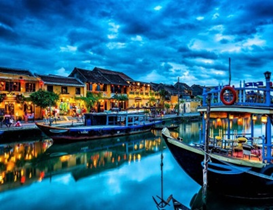
15 MUST – SEE HOI AN ATTRACTIONS – PLACES TO VISIT FOR TOURISTS
Historic, graceful Hoi An (Hội An) is considered the most delightful town in Vietnam.The ancient town of Hoi An, which is about 30 kilometers south of Da Nang, lies on Thu Bon (Thu Bồn) River’s banks. Hoi An nowadays still has a distinct atmosphere with low, tile-roofed, houses and narrow streets with the structure still remained as the original ones. Hoi An is considered one of the most popular tourist attractions in Vietnam. With the ancient charm of shrines, temples, pagodas, Chinese style wooden houses, and the unique but harmony combination of Chinese and Japanese architecture, Hoi An lures a large number of both domestic and international tourists in Vietnam. There are a lot of Hoi An attractions for tourists to visit and a vacation in Hoi An would be an ideal suggestion for a break from the hustle and bustle city life with the tranquility around. If you are wondering which interesting destination to visit in your upcoming vacation is, then let Hoi An be your choice. Really, whoever coming to Hoi An, Vietnam cannot deny that it is strongly favored by nature with a lot of Hoi An attractions appreciated by international tourists worldwide. . Just simply take a quick look from this checklist of Hoi An attractions to see what to do and where to visit in Hoi An, Vietnam!
1.Cua Dai Beach (Bãi Biển Cửa Đại)
When it comes to Hoi An attractions, Cua Dai Beach should be the first one in this list. This is the main beach of Hoi An, which is situated at the end of the road that is predictably named Cua Dai road.
Cua Dai Beach means the “big sea mouth”, which is over 3km in lenth and up to 300m in width. The beach is closest to Hoi An, and is an incredibly long beach with a lot of space to wander off for a bit of personal relax, which is hard to find in Vietnam nowadays.
Being long and wide, Cua Dai beach has clear water with tropically blue waves which are gentle enough for floating and swimming around. Tourists will discover a few changing huts along with a couple of bungalows on this beach. Cham Island could be spotted from the distance on a sunny day with its willow tree supplying tourists with shade to enjoy the view. A few water sports are set up at this beach, not to mention a lot of deckchairs, parasols and a lovely line of trees giving shade; hence, it is not necessary for you to worry about spending many hours under the sun without being able to cool down. It is very great to visit this beach at sunrise and witness the fishermen and their boats trading what they have caught.
Wide and long Cua Dai beach, one of the most recommended Hoi An attractions, is a beautiful beach featuring with sloping soft white sands located 5km away from the ancient town of Hoi An.
Also, there is a series of seafood restaurants situated around the coast, so tourists can comfortably enjoy their dinner without having to walk too far.
Cua Dai, one of the most well-known Hoi An attractions, is another reason for tourists worldwide to visit Hoi An, where they could soak up all the celebrated historical and cultural sites before heading up to the beach and experience what is usually claimed to be the most stunning coastal shore of Vietnam. Deserted white sands and crystal blue sea water at Cua Dai Beach are hard to find in any other place in Vietnam.
2. An Bang beach
Aside from Cua Dai Beach, An Bang Beach is another beach that should be added to the list of must-see Hoi An attractions. At An Bang beach, you will see a perfectly balance of convenient restaurant and bars, islands views, green lawns, year round swimming and the spectacular East Sea. An Bang beach is just 4km from Hoi An and approximately 30km from the Da Nang international airport. It is one of the most ideal places for tourists to lay their hat and enjoy airy breeze. Actually, this is among a few remaining stretching beaches which still remains nearly un-spoilt by the tourism development, offering castaway restaurants, blue sea, and bohemian beach bars. Not only does it flaunt the most spectacular mountain and island views that tourists do not even need to climb off their lounger to enjoy, but also many of the best fresh seafood in Hoi An. In fact, unlike other beaches, there is always something to do at An Bang Beach for whatever reason; whether you prefer some sunbathing or surfing, An Bang beach never disappoints you.

3. Cham Island
One of the most beautiful Hoi An attractions is Cham Island. This picturesque coastal spot offers tourists a chance to visit stunning beaches, lush forest, and a cute village, making their day trip to the island really worthwhile.
Just about 27km away from Hoi An coast, Cham Island is reckoned as a pristine paradise which is at best during summer months, from April to September. Especially, during those months, tourists can witness to some storm activities. In the cooler months, diving tends to be less worthwhile. In addition to the amazing beaches and breathtaking views, Cham Island also boasts itself as a popular diving and snorkeling spot. There are a few companies based out of Hoi An offering day trips to this island. Tourists should decide whether they would like to go for snorkeling or diving, or simply enjoying the island itself with its impressive beach and village.
4. Hoi An riverside
One of the most famous Hoi An attractions is Hoi An Riverside, which is considered as the major landmark in Hoi An. This site is where both modern and traditional boats drop their anchors and where local people go to shop at the wet market daily morning.
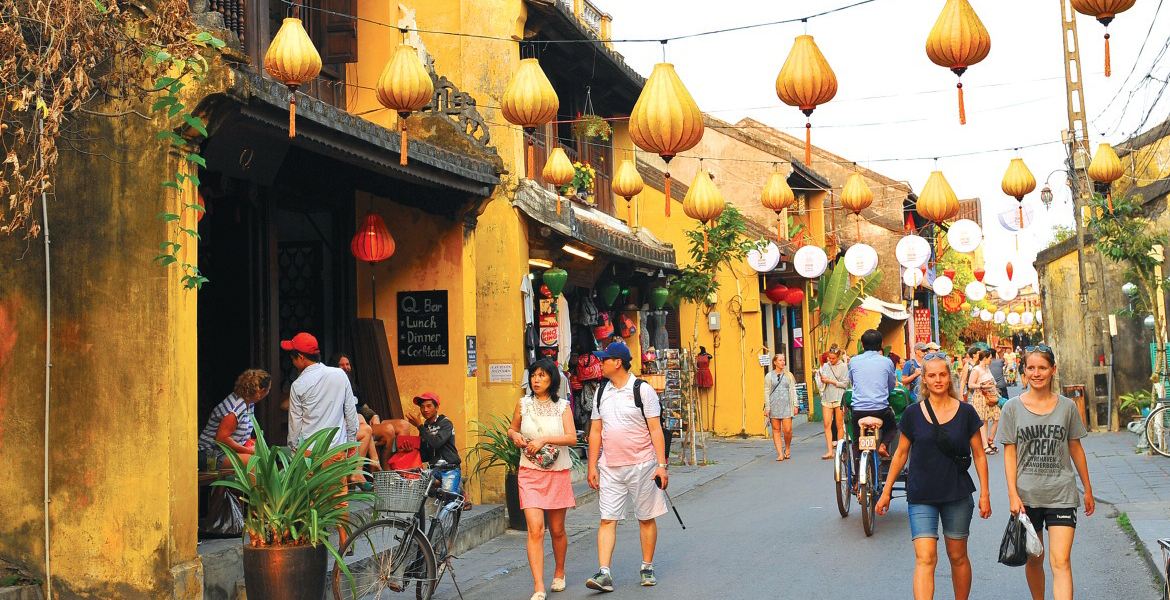
The town is reintroducing the presence of colorful and gorgeous hand-crafted lanterns. Especially, on the special nights of a month, hundreds of them hang on windows and verandas as they normally did more than 300 years ago.
Hoi An Riverside is where you could sample good coffee, seafood, home-caked and international food as well. Travelers can enjoy the pleasant waterfront region which is the most popular for tourists to dine.
Not mention to the romantic, mysterious atmosphere that every tourist will experience when visiting Hoi An Riverside, the nightlife of this place is also worth experiencing. It brings to travelers the feel of a hippy-like atmosphere. This is where you could see both sophisticated and budget tourists are comfortable together. And, along with the magical atmosphere created by the reflection of the old-style Hoi An lanterns on the water, the Riverfront becomes the most out-of-town that tourists often hang out at night. Here, people can enjoy a simple meal and have friendly conversations while sipping a few drinks with their friends.
5. Hoi An old Town
One of the main trading post from 16th to 17th centuries in Southeast Asia is Hoi An Old town. This seaside old town is basically a living museum which features with a unique mixture of West and East in the form of its old-town architecture. When it comes to Hoi An attractions, this might be the most well-worth one. There are two great things about Hoi An Old Town:
- It is small and peaceful enough for tourists to walk around on food
- The traffic is not as heavy as in the bigger cities.
A number of buildings in this Old Town were built more than a century ago and characterize strong Chinese influences which originate from merchants from Fujian, Guangzhou, Hainan and Chiu Chow.
Tourists visiting here can enjoy a cycle riding tour as an alternative and interesting manner to explore this site. Many bars and cafes available in Hoi An offer happy hours and some even begins as early as 4 pm. Chilling out in a coffee shop on a comfortable and big sofas and enjoying a few snacks, drinks or a game of darts and pool are very exciting for tourists after a long day of walking on foot to discover this old town.
Keep reading this list of Hoi An attractions to visit more must-see places in Hoi An!

6. Gem Art Museum
If you are person who has a love for jewelries, the Gem Art Museum (GAM) is your ideal destination. It is a private museum, jewellery store, lounge and bar in a nice villa nearby Hoi An’s Japanese Bridge. This museum presents gems collected by a native Hanoian named Dung Duong. GAM is proud of being the most extensive collection of gem sculptures, rare minerals, and cut stones in Vietnam.
Admission to this museum is free if you order a drink at the garden bar located at the back area. This bar is opened up to late night.
7. Tan Ky House
This house is established in two centuries ago by an ethnically Vietnamese family, and has been preserved through 7 generations. The architecture of this house is influenced by Japanese and Chinese styles. Japanese elements are shown through the ceiling, which is supported by three progressively shorter beams, each one placed on top of the other. The Chinese elements are shown on the 150-year-old panels featuring with images of birds gracefully portrayed in different positions of flight. The roof is made of tiles, from the outside; and inside, the ceiling consists of wood. These features keep this Tan Ky House warm in winter and cool in summer.
- Opening hours: 8 am – 11 am & 2 pm – 4 pm daily
- Location: No.101 Nguyen Thai Hoc (Nguyễn Thái Học) Street, Hoi An (Hội An)
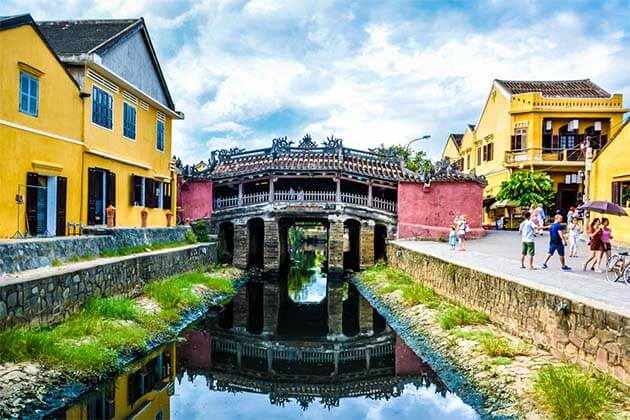
One of noticeable Hoi An attractions, the Japanese Bridge is a signature landmark of Hoi An, which is also used widely as an emblem of Hoi An. It was established by Japanese merchants in 16th century.
Situated at the Western corner of Tran Phu (Trần Phú) Street, in the 16th century, this bridge connects the Chinese merchant community on the east side of the canal with the Japanese community on the western side. Though it has been rebuilt a few times since its establishment, it still retains its distinct characters as well as impressive Japanese elements
The entrances of this bridge are guarded by weathered statues: a pair of dogs on one side and a pair of monkeys on the other side. While accessing to this bridge does not cost you, you might have to surrender a tick to see a temple built in the northern side of the bridge.
9. Kim Bong Carpentry Village
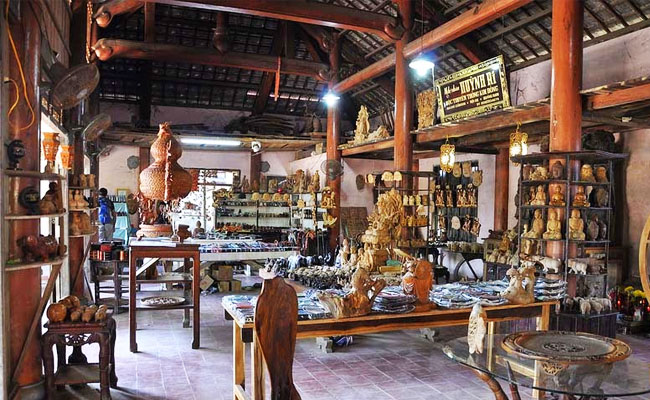
The Kim Bong Carpentry Village has been originated in the north of Vietnam since the 16th century. This village has had its artisans work on furniture as well as houses across the country, from Hue royal and citadel tombs to gorgeous buildings in Hanoi or a lot of architectural projects in Hoi An’s heyday. It is said that the style of Kim Bong Carpentry is the mixture between Cham kingdom, Japanese, China,… and of course the skilful hands of Vietnamese craftsmen. Over many years, this village has developed strongly and formed 3 groups of artisans: civil wooden furniture, ancient architectural construction, and shipbuilding. Regardless of the group, the craftsmen of Kim Bong still remain their traditional way of starting out as apprentices and earning a high rank of master via many years of hard work.
Nowadays, tourism companies often plan their tours to Kim Bong Carpentry in the form of a half-day bike riding, allowing tourists to see the craftsmen as well as artisans working with their professional and skillful hands on the simple crafts. The common products of the village include religious statues, furniture, and finely crafted wooden doors that could be easily found and bought in the majority of souvenirs shops.
10.Thanh Ha Pottery Village
Whether you’re just looking to buy some pottery or ready to get your hands dirty and learn how to shape some pottery yourself, the beautiful Thanh Ha Pottery Village won’t disappoint. The village dates back to the 15th-century and it was originally created to supply decorative pottery for the Imperial City of Hue.
Over the centuries, the village has developed a number of techniques that allow crafters to create everything from bricks and tiles to bowls and pots—and to do it all by hand in a stunning rainbow of pinks, greens, and blacks. Today, Hoi An’s ceramics are sold all over the world.
11. Tra Que Village
This is a small village situated 3km north of the Old Town of Hoi An. The location of this village is between Tra Que alga pond and De Vong (Đế Vọng) River. Due to the particular condition of rich soil as well as water, this village has long been well-known for growing a lot of types of veggies, including basil, salad, lettuce, flagrant knouted, houttuynia, coriander vegetables, and so on. It also creates big fame for Hoi An in terms of traditional specialties. The name Tra Que is also the name of sweet vegetables, which spice up the daily meals of Hoi An locals.
Visitors coming to Tra Que Village are usually fascinated by observing the farming procedures of those local farmers, such as ranking the soil, sowing, watering, picking veggies and other activities that are rarely seen in the modern life nowadays.

12. Tran Family Chapel
Tran Family Chapel is considered as one of the most historical and oldest houses in Hoi An, also a must-see historical Hoi An attractions. Original, this place served as a worshipping place for the ancestors of the family and a reminder about the tradition to the following generations of the family. Nowadays, visitors could find this place one of the must-see Hoi An attractions in the old town
For those visitors who are interested in the historical and unique atmosphere of those ancient sites, then visiting to the Tran Family Chapel will become one of the most remarkable routes of their trip. In order to get this site, you can use bike or even walk on foot as it is situated in the center of Hoi An.
13. The Chinese Assembly Halls
Another option among top Hoi An attractions is Chinese Assembly Halls. Built in 1960, The Chinese Assembly Halls is the place in which residents from China could meet up and socialize while living or visiting Hoi An. There are 5 assembly halls established by the Chinese, all are situated on Tran Phu (Trần Phú) Street, and faced Thu Bon (Thu Bồn) River. Recent days, these assembly halls become well-known Hoi An attractions.
In fact, among these five Hoi An assembly halls, the Fujian Assembly Hall might be the most well-known as well as biggest one, which is situated at 46 Tran Phu (Trần Phú) Street. Other assembly halls are Ngu Bang (Ngũ Bang) Assembly Hall (aka Trung Hoa Assembly Hall), Trieu Chau (Triều Châu) Assembly Hall, Quang Dong (Quảng Đông) Assembly Hall, and Hainan
14. My Son Sanctuary
My Son Hindu Sanctuary, one of UNESCO World Heritage Sites, is a worth-visiting sample of the ancient Champa (Chăm pa) civilization. Situated in Vietnam’s southern part, it is a definitely worth-visiting Hoi An attractions, in particularly, and Vietnam attractions, in general. Used to be an independent state during the centuries of 2nd-17th, those Hindu-themed ruins are featured with a lot of beautiful stone sculptures, towers and temples in tropical jungle surroundings.
Actually, My Son was a political centre consisting of over 70 structures devoted to Hindu gods as well as goddesses. The most recognized one is Shiva, who was reckoned as the protector of Champa’s kings. Visiting here, you will be impressed by their skillful techniques of using sandstone and bricks.
My Son Sanctuary is really one of worth visiting Hoi An attractions for tourists, particularly those who love history.
It is said that the best time to visit this site is early in the morning as it is not too hot and the tourists coming there is not too busy.
15. Duc An Old House
Duc An Old House with more than 180 years old, it is a charming site decorated with a few attractive pieces of anteak work. This is a place that has welcomed hundreds of tourists to visit and witness the ancient beauty as well as quietness of the moss tile roof every day. It is marked by a series of activities of the Vietnamese Organization – The Vietnam Revolutionary Youth in Hoi An in – in terms of renovation.
THINGS MUST KNOW BEFORE TRAVELLING TO HOI AN
Fun Facts about Hoi An:- Hoi An, Vietnam is home to the UNESCO protected Ancient Town
- There is no airport in Hoi An. The closest airport is in Da Nang (DAD)
- Hoi An is about a 45 minute drive from Da Nang
- The population of Hoi An is over 150,000 but still feels like a small town.
- Hoi An is only 4 km to the nearest Beach (An Bang)
- Every night in Hoi An, visitors light candle lit lanterns and float them down the river
- Hoi An received over 5 million tourists in 2018
- Hoi An’s first Casino opened in March of 2019
- There are over 400 tailors and 200 spas in Hoi An
- Hoi An Ancient town floods most years
- Hoi An has a VERY rainy season that runs October until February
- There are two main markets and one night market
- The town is busiest from 3 pm until 8 pm when tour buses arrive from Da Nang.
- There’s a wealth of things to see and do in Hoi An, here are my picks on a few of the very best.
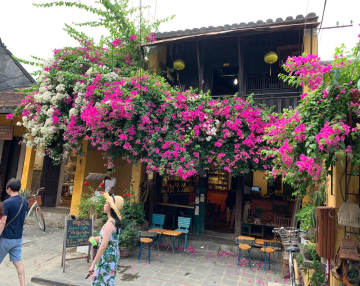
- Explore Hoi An’s Old Town on foot and take yourself on a DIY tour – it’s hard to get lost and the photography opportunities are endless!
- Wander the bright lights of the Hoi An Night Market and, inevitably, get sucked into buying a gorgeous lampshade
- Have clothes custom made at a local tailor, just be sure to specify exactly what you want and spare no detail
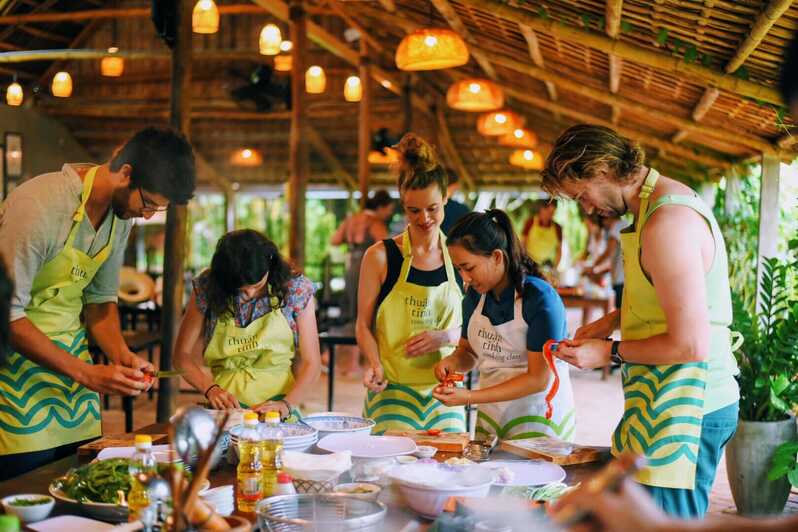
- Join a cooking class and learn to prepare all your favourite Vietnamese treats
- Visit the Japanese Covered Bridge and snap some photos of the historic site
- Take a trip to Cua Dai or An Bang Beach to soak in the beach vibes
- Hire bicycles and ride around town, finding hidden pockets of beauty and new places to eat
- Check out the historic Tan Ky House, built over two centuries ago
- Photograph and explore the Assembly Hall of the Fujian Chinese Congregation
- Join the Full Moon Festival and get your party on!
- Take a guided food tour of Hoi An Old Town
The closest airport to the city of Hoi An is the Da Nang International Airport (DAD), which is about 30 km north of the city, and based in the heart of Da Nang city. From the airport, it is possible to take a car or a minibus journey to Hoi An which can take a further 40 to 45 minutes. Hoi An is a great positive of taking the car journey is the very scenic coastal route that is taken and includes sights of the local rice paddies and small towns.
Other forms of transport include the train and bus services. The town of Da Nang is the closest train station, which is then a short journey to Hoi An by taxi. For the bus service this is quite restricted with most of the routes limited to the Da Nang region. However, there are a few bus tour companies that offer direct travel to Hoi An which can help to avoid making the extra stops and changes in transport.
Best place to shop in Hoi An
When shopping in Hoi An, you’ll find that the town offers quality silk and affordable tailoring services. The Ancient Town is the best place to get custom made dresses, suits, shirts and shoes at a fraction of the price you’d pay for them back home. There’s also a local market that sells fresh produce and foodstuff. You can find plenty of fair-trade shops and non-profit charity organizations in Hoi An, with proceeds funding impoverished families and disabled locals..
Best places to go at night in Hoi An
The nightlife in Hoi An mostly consists of trendy bistros, cafés and bars overlooking Thu Bon River. As these venues are within walking distance of most of the town and each other and stay open until 03:00, Hoi An is ideal if you’re a fan of bar-hopping. The city is also popular for its night market. The streets are lit with hundreds of colorful lanterns and candles floating down Thu Bon River, and you can enjoy traditional dances and music performances in the evening. For a wonderful evening in Hoi An, we suggest checking out the following nightlife attractions.
Food and drink
Hoi An is appreciated for its diverse range of dishes. From upscale restaurants to mobile carts, the food is of a very high standard and fabulously cheap with the way wide range of must tries including the white rose dumplings, Hoi An wontons, chicken, mi quang, cao lau, and some of the finest banh mi in the country. Additionally, there are plenty of food tours and cooking classes in the local area.
Accommodation
Most of the hotels and guesthouses in Hoi An are within a short distance of the historic old quarter, although there aren’t that many places to stay that are directory within the confines. But those are can be quite expensive.
Hoi An is a perfect destination for the top range and mid-range travellers who are able to get a very nice hotel for about $50-$100 per night. For the low-cost accommodation for the backpacker, there are plenty of dorms that can cost in the region of $10 per night, but these are usually a good 10 to 15 minute walk from the town.
This city is an extremely popular itinerary destination on the Vietnam tour packages. The prices for the hotels and guesthouses can fluctuate with the season and demand. But for those tourists willing to travel in the low season it is possible to get deep discounts if booked early and online. Plus for those that are staying at the family run guesthouses, it is often possible to get a great bargain. However the more formal establishments like the hotels are less able to give discounts and will quote the standard prices.
Night Market
It is so nice to walk to Hoi An’s night market to shop for local sovenirs like coloful lanterns, taste delicious Hoi An’s food along the Hoai River. If you are romanic enough, take the boat trip in front of the Japanese Bridge to see the ancient town in sparkling lights.
Transportation
Most of hotels and hostels offer their guests free bicycles. It is the most popular mode of transport for visitors to Hoi An. The streets are flat, so even if you are not fit you can easily cycle around the town.
WEATHER & THE BEST TIME OF YEARS TO VISIT HOI AN
Hoi An has two very distinct seasons:
Rainy Season: Have you seen Forest Gump when he was in Vietnam? The rain can be relentless from September to December and falls hardest in the month of October. The best part about these months though is that there is relief from the heat. Most people would believe this is the low season but many people flock to Hoi An during the cooler weather. Hoi An is also no stranger to flooding, especially around the Ancient Town. Be prepared for rainy weather and temperatures dropping to high of 19°C in late December.Dry Season: Or I like to call it oppressive heat season. For about two weeks after the rain ended in January the temperatures were very pleasant. After that, the humidity and heat set in. Daily highs shot back up to 30°C with the humidity “feels like” hitting the 40°C mark by March. If you love sitting at the beach or lounging by the pool all day, this weather is PERFECT! My advice is to do your exploring at night or very early in the morning. The heat and humidity are no joke and the town will be abandoned between 11 am – 2 pm. June, July and August are the three hottest months of the year.
The best time of the year to visit:
It depends on who you talk to but our best advice would be February, March and April. The rain will have ended and you will be met with sunny days without the oppressive heat. If you visit between May to August be prepared for high humidity, relentless sunshine and highs up to 35°C.

LIST OF SOME LOCAL FOOD IN HOI AN
- White rose
- Gridle Cake (Banh Trang Kep)
- Vietnamese coffee
- The best Bánhmỳ in Vietnam
- Bánh bot loc – Vietnamese clear shrimp & pork dumpling
- Bánhít – Vietnamese sticky rice dumpling
- Savoury Coconut Pancake
- Balut egg (Optional)
- Cao lau noodle
- Slice pork wrapped with rice paper
We board the Red Bridge boat for a leisurely cruise (25 minutes) along the Hoi An River to the Red Bridge Cooking School. This is a chance to view local river life, so make sure your camera is handy.
On arrival, we explore the cooking school’s herb garden, before learning about some of Hoi An’s and Vietnam’s well-known dishes. The cooking lesson runs for about 2 hours – the Red Bridge chefs first demonstrate each dish before we prepare the same dish ourselves. Included in the class is a brief introduction to Vietnamese food carving (plate decoration). After the lesson, we sit down and eat what we have cooked
Recipes:
- Rice paper (making)
- Fresh Rice Paper Rolls of Shrimp
- Crispy Hoi An Pancakes with Shrimp, Herbs, Bean Sprouts & a Peanut Sauce
- Seafood Salad with mixed Vietnamese Herbs served in Half a Pineapple
- Quang Nam Style Fresh Noodles with Chicken
- Food Decoration – Pineapple Boat, 3 Colored Flowers & Vietnamese Hand Fan