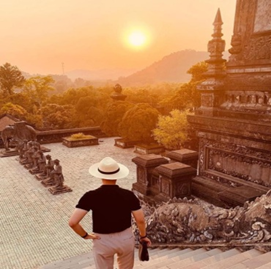
TOP 14 MUST- VISIT DESTINATIONS IN HUE
Location and historyLocated on the bank of Song Huong- Perfume River; Hue, the capital of Thua Thien Hue province in Central Vietnam is 700 km southern Hanoi, 1100km northern Ho Chi Minh City, and only a few miles from the sea. Not until 1945 was Hue the national capital, the political, cultural and religious center of Vietnam under the control of Nguyen Dynasty. Most well-known for its historic values; Hue had been recognized as one of the World Heritage Sites by UNESCO.
What to see in Hue
If you are a history buff, or simply love discovering exotic cultures, Hue- Vietnam’s former Royal Capital is definitely on the top list of your travel plan. The city represents the outstanding demonstration of the power of the vanished Vietnamese feudal empire, including a complex of monuments, tombs and pagodas that attract tourists coming from all over the world.
1.Hue Festival
Highlights: Every two years in April, May or June
Location: Hue, Thua Thien-Hue Province
Hue Festival is held in April, May or June every two years. It takes place at 40 venues around the city. Some of the unique events held include, the Hue Poetry Festival, Dialogue of Drums and Percussion and Ao Dai fashion shows. You can also enjoy sporting activities like kite flying, boat racing, and human chess. As Hue was the capital of Vietnam during the 19th century, the festival also hosts re-enactments of royal ceremonies, such as King Nguyen Hue’s enthronement and doctorial examinations. Street performances, film screenings, and art exhibitions are held throughout the festival week as well. Offering visitors a look into the city’s rich culture and heritage, Hue Festival is one of the most popular festivals in Vietnam.

2. Hue Citadel- The Imperial City
Location: Hue, Thua Thien-Hue Province
The walled fortress and palace in the city of Hue was once the administrative capital of Southern Vietnam. The Citadel grounds are surrounded by a moat fed by the Perfume River and inside the Citadel is the Imperial City which houses the Purple Forbidden City inside its perimeter. The vast complex was once the administrative centre of southern Vietnam during the 17th and 18th Centuries and, although the complex is in disrepair and restoration has been slow, it’s still absolutely worth a visit when in Hue.
3. Minh Mang Tomb
Minh Mang Tomb, hailed as the most ambitious royal tomb built during the Nguyen Dynasty, is located along the west bank of Perfume River. Accessible within a 30-minute drive from Hue City Centre, construction of the expansive tomb started in 1840 under the order of Emperor Minh Mang before it was completed two years later during Emperor Thieu Tri’s reign. Surrounded by landscaped lakes and canals, Minh Mang Tomb houses 40 buildings in total, including palaces, temples, terraces, and pavilions
Opening Hours: Daily 07:00 – 17:00
Address: Huong Tho Commune, Huong Tra District, Hue
4. Tu Duc Tomb
Tu Duc Tomb is one of the many royal tombs set within the outskirts of Hue Imperial City. Built between 1864 and 1867 in commemoration of the fourth emperor, the complex also served as a summer palace for Emperor Tu Duc thanks to its natural hillside and riverfront landscape. Home to a massive lake and over 50 palaces, pavilions, temples and shrines, the Tu Duc Tomb offers relaxing ambience for visitors looking to experience the remnants of ancient Nguyen Dynasty. Set within Thuong Ba Village, the royal tomb is 15-minute drive from Hue Imperial City.
Opening Hours: Daily 07:00 – 17:00
Address: Thuong Ba Village, Thuy Xuan Commune, Hue

5. The Tombs of the Emperors: Tomb of Khai Dinh
Although a hugely unpopular Vietnamese ruler, the Tomb of Khai Dinh is one of the most visited and elaborate of the Emperor Tombs in Hue. The ceramics adorning the inside of the tomb are impressive and the mix of Vietnamese and European architecture are in stark contrast to the simplicity of the tomb of Tu Duc.
Opening Hours: Daily 07:00 – 17:00
6. Thien Mu Pagoda
The Thien Mu Pagoda, overlooking the Perfume River, is an iconic Hue backdrop and a symbol of the ancient city. The 7 story pagoda was originally built in 1601 but, as a site of political demonstrations, has been destroyed and rebuilt many times in the years since. The pagoda is still a religious site today and it’s common to see monks wandering around the grounds.
The Austin car which Thich Quang Duc, the infamous burning monk, used to drive himself to the Ho Chi Minh intersection where he burned himself to death in an attempt to demonstrate that Buddhism needed martyrs is also housed on the grounds.
Opening Hours: Daily 07:00 – 17:00
Address: Kim Long, Huong Long Ward, Hue
7. The To Mieu Temple
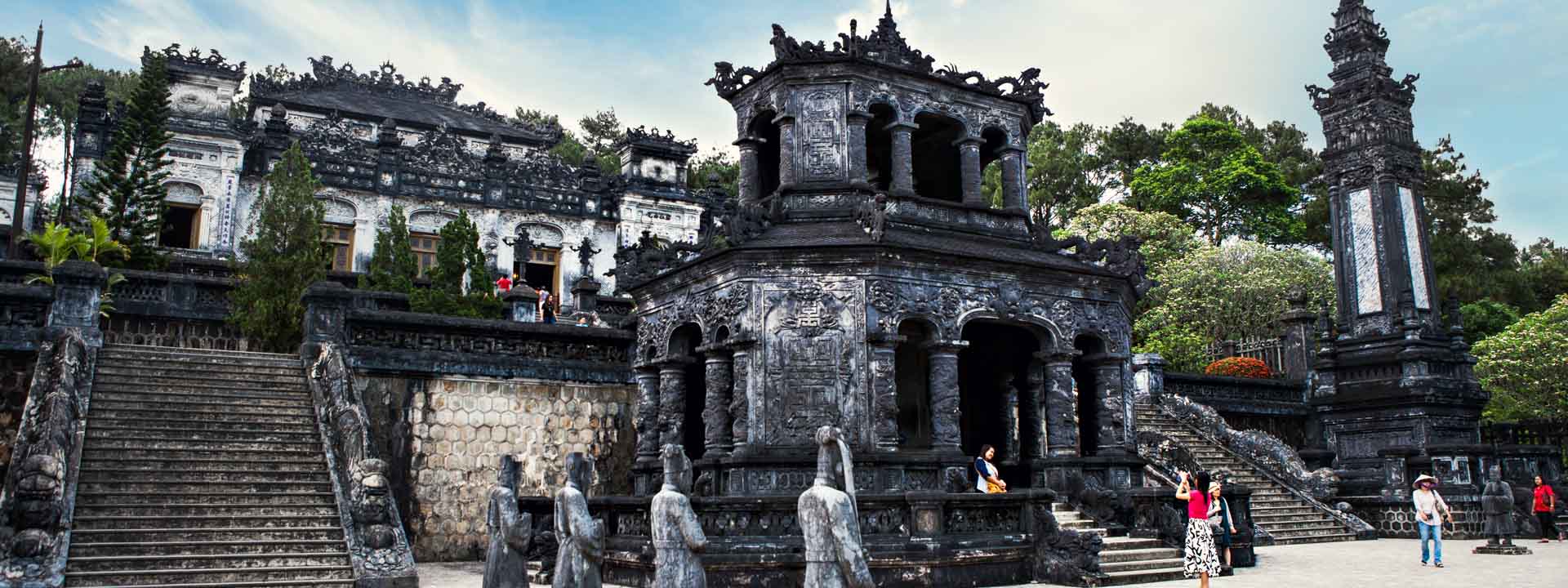
The To Mieu Temple was constructed by Emperor Minh Mang in 1821 in commemoration of former emperors of the Nguyen Dynasty. This well-preserved landmark is located southwest of the UNESCO protected Complex of Hue Monuments. While travellers are free to explore the temple site, guided tours are available for those looking to know more about the history of Hue.
The To Mieu Temple houses various personal items and portraits of its ten emperors. The main hall is divided into nine rooms while the second features seven rooms, all of which are interconnected. This makes it easy for visitors to navigate their way through the temple grounds.
Opening Hours: Daily 07:00 – 17:00
Address: Le Huan, Thuan Thanh, Hue
8. Bach Ma National Park
Bach Ma National Park stands at 1450 metres above sea level, hosting majestic waterfalls, hiking trails, and dilapidated French villas. Home to thousands of rare plants and wildlife, visitors can enjoy a full day (or two) of hiking, camping, rappelling, swimming
Opening Hours: Daily 07:00 – 17:00
Location: Phu Loc, Hue
9. Hon Chen Temple
Hon Chen Temple was built to worship Po Nagar, the Goddess of the ancient Cham population in Ngoc Ho Village. Set atop a small rocky cliff in Ngoc Ho Village, this unique shrine underwent numerous restorations under the reigns of Emperor Minh Mang and Dong Khanh between 1832 and 1886. Today, it houses several relics such as ancient vases, Chinese scriptures, religious figures, and animal carvings. Hon Chen Temple Festival is held in the middle of the third and seventh lunar month every year, when visitors can enjoy traditional rituals, folk dance and music performances by local devotees in colourful costumes.
Opening Hours: Daily 07:00 – 17:00
Address: Ngoc Ho Village, Huong Ho Commune, Hue
10. Dong Ba Market
Visiting a market is an essential part of any Vietnamese sightseeing adventure and Dong Ba in Hue is a decent option. The market is a mix of local Vietnamese produce and souvenir shopping and it’s fascinating to witness market life. Be prepared: it’s dirty and grimy and a tourist tax is inevitable!
Opening Hours: Daily 07:00 – 17:00
11. Perfume River
Perfume River spans approximately 80 kilometres in length, flowing from Truong Son Mountain through Hue City Centre and Bang Lang Fork. The river was given its name over 100 years ago, due to the scent of flowers that dropped in the water from upriver orchards. As the strong floral scent was carried through the river during autumnal months, it resulted in locals naming it as Perfume River.
Today, it may not smell as fragrant due to modernisation and the increasing number of riverboats but it’s still one of the most popular landmarks in Hue. The waterfront gets very lively in the evening. Local youths often flock to the park to enjoy breathtaking sunset views of Perfume River. The Trang Tien Bridge (Cau Truong Tien) also becomes illuminated with colourful LED lights, resulting in an impressive sight.
12. Thanh Toan Bridge
Thanh Toan is a tile-roofed bridge built about 200 years ago over the Nhu Y River. It is not big, about 17 metres long and four metres wide and is made of wood. There is a shrine inside the bridge set up for the lady who funded its construction. This beautiful and charming bridge is about 10 kilometers east of Hue.
Opening Hours: Daily 07:00 – 17:00
Location: 7 kilometres east of Hue
13. Tam Giang Lagoon
Cover a large area from Quang Tri province to Lang Co beach, Tam Giang lagoon will be the great chance for those who love the nature and brackish water lagoon.
Just 15km away from Hue City to Thuan An Beach is the closest place of the lagoon with Hue city centre. Tam Giang Lagoon is the “open treasure” hidden behind the charming and graceful of Hue ancient Citadel. From here you can make a visiting at Cha Mountain – mangroves forest in Tam Giang, Chuon Lagoon, ect to see local people in raising seafoods such as shrimp, crab, fish, snail, etc
Furthermore, the beautiful, untouched lagoon and also one of the biggest of its kind in Vietnam will surely take you to discover the breathtaking and stunning natural landscape.
Tam Giang Lagoon has a depth from two to four meters and in some places around seven meters. There are many activities to spend in Tam Giang Lagoon from seeing pure water to handicraft villages. Taking a boat trip on Tam Giang Lagoon, you can see closely how the fishermen divide up the areas with hand-made nets while fishing.

14. Lang Co Beach Bay
Lang Co Bay is between Hue and Da Nang city. This beach bay offers the wonderful landscapes for relaxing and swimming. By a long white sand beach plus blue seawater of Lang Co may attract everyone for the first sight.
Especially, Lang Co beach offers the great sunset moment which you can feel to harmony with the nature and fishing village and Lap An Lagoon.
Lang Co beach is one of the must stop on the way Hue to Danang and Hoi An or vice versa. It gives tourists the fresh mind and has a swimming before reaching the next destination. Along the beach is some resorts and hotels which enjoy the cool atmosphere before conquer Hai Van Pass closely it.
THINGS YOU SHOULD KNOW BEFORE VISIT HUE
How to get to Hue city?Hue is between Hanoi and Ho Chi Minh City and in central Vietnam, it is easy to reach Hue by many transportations.
1.By plane:
It takes 1hour and 10 minutes for flight from Hanoi and more than 5 minutes from Ho Chi Minh city. There are from 6 to 10 flights each day for choice to reach Hue base on each season.
At this moment there are Vietnam airlines and Bamboo airway and Vietjet air which have flights to Phu Bai airport in Hue city
2. Public bus or tourist bus:
Its schedule is daily in morning, at noon time or afternoon with late afternoon for traveller to choice.
From Hanoi to Hue: Normally the bus leaves around 6.00 pm and travel full night on bus to reach Hue city in the next morning. Also the bus stop at Dong Hoi -Dong Ha before reaching Hue.
From Ho Chi Minh to Hue, the time is also the same and the bus always stop in main cities such as Mui Ne, Nha Trang, Da Lat, Hoi An, Danang before reaching Hue. Because the distance is longer so the bus arrive in Hue around afternoon for tourist bus. With local bus it depends on the time you leave can be earlier if leave Ho Chi Minh in the morning.
With short distance it connects Da Nang and Hoi An to the south and Dong Ha and Dong Hoi to the north.
3. By train:
Connecting north and south country, therefore, there are many trains pass through and stop in Hue Railway Station. There’s a wide range of trains available coming with varying speeds. The prices depend upon the speed of the rail.
In general, traveller can buy train tickets with numerous tour operators and travel company. Or can go to train station and buy it. There is also online booking train ticket on website of Vietnam Railway. Train station is right in city centre and just 5 minutes by taxi or motorbike
WEATHER , TOURIST SEASONS IN HUE
When is the best to visit Hue city?Located in Central Vietnam and famous for the hot in summer, Hue brings you different atmosphere when visiting each time of year. Before Hue has four seasons clearly, however, because the change of climate on over the world, Hue seems to change into two season with hot season and winter season when there is lots of sun all year round.
1.Spring
Spring season is from January to March is one of the best time to visit Hue city. The climate is always cool and sometimes has cold around 15 to 25 degrees. Especially, spring is the season of flowers blooming so it brings you the beautiful landscapes all around the city.
2. Summer
Summer is from April to June and but it is hot from May to June and sometimes has afternoon rain on June. It is hot from 30 to 35 degree.
3. Autumn
It is also hot climate on dry season from July to September which is on the Autumn. Nowadays, July to August is hot, not cool as before because of the changes of climate in the world and the temperature is increasing.
4. Winter
Winter season also the flood season usually falls on October to mid-November or sometime to the end of November. However, if you travel on flood time, it has not much affect because most of mausoleums is in south of city and not affect by flood. Just only The Citadel and Thien Mu Pagoda in north of city cannot visit if the water level is high.
Infact, the flood time is only within one month from mid-October to mid-November can affect your trip in Hue city, however, it also depends on each year. Because it has not always big flood to affect each year, just some years has one.
Is it good time to visit Hue on Autumn?
Yes, visitor can visit Hue all year round. For autumn season from August to mid-October it is cool and nice for visiting. Although it is hot from April to September, it is idea for combine visiting complex of monuments and tombs with relax on nice sandy beach of Thuan An or Lang Co.

10 BEST HUE DISHES- MUST -TRY DISHES IN HUE
Where to Eat?First of all, Hue is the land of Royal family so it is famous for Royal dishes. Therefore, visitor can taste Royal dishes at luxury restaurant or even be a King/Queen while dining. There are many restaurants for you to get this experience and art foods as Royal like Tinh Gia Vien, Y Thao Garden, Tha Om as garden house style.
Second, Hue is very famous for local foods with hundreds of dishes will pleasure visitor to taste. It is budget cost so that you can try as much as possible.
1.Bun Bo Hue
Bun Bo Hue is the must taste dish once you travel to Hue. Thanks to its special, Bun Bo Hue is famous all over the country which you can taste when you are in Hanoi or Ho Chi Minh city. However, just in Hue city it will brings you the original taste. It is very simple to wander around streets and enjoy a bowl of Bun Bo.
Furthermore, Hue is well known by different traditional Hue cakes or called banana leaf cakes. These are Nam, Loc, Beo, It, etc which each cake brings you a different taste which you remember forever. Thanks to the special ingredients of Hue people, Hue food has different tastes compared with other parts in Vietnam.

2. Hen Rice
Com Hen (rice with mussel) is a very unique cuisine of Hue. Com Hen contains rice, boiled mussel, star fruit, fish sauce, cabbage, onion, pepper, peanut, chili, and a variety of herbs. The specialty is all of these elements are cold. When people eat Com Hen, they add all the above ingredients to a bowl, and slowly add boiled mussel broth with chili sauce into the bowl (the broth is the only hot thing in Com Hen). Com Hen has an extremely spicy flavor as such, so gastronomes remember it just after one time enjoying.
3. Banh Beo
Banh beo (water fern cake) is a kind of small steamed rice pancake. The name is to refer from the shape of the cake (like a water fern-Beo in Vietnamese). It is white in color, sometimes nearly transparent and usually has a dimple in the center, which is covered with savory recipes including chopped dried or fresh shrimp, scallions, mung bean paste, crispy fried shallots, fish sauce, rice vinegar, and oil.

4. Banh khoai
Banh khoai (delicious pancake) is so much like Banh xeo (sizzling pancake) since they both are made from rice flour, water, turmeric powder, added slivers of fatty pork, shrimp, bean sprouts and then pan fried. Banh khoai and Banh xeo also are wrapped in mustard leaf, lettuce leaves or rice paper, and stuffed with variety of herb, like mint leaves, basil and served with a sweet and sour mixed sauce. In Hue, Banh khoai is placed open-face instead of being folded in half like Banh xeo. Moreover, Banh khoai always goes with a fermented soy bean sauce, and people consider it a winter food owing to its greasiness and spicy taste of the sauce. Therefore, most Hue citizens only make them when winter coming.
5. Mam tom chua
The central of Vietnam is reputable for its Mam tom chua (sour shrimp sauce) and Hue is the best place for this unique sauce. Unlike normal shrimp sauce (has brown color and smooth surface), Sour shrimp sauce has orange color while shrimps still keep its original shape. It is quite simple to make this sauce. First, shrimps are clean by salt water (do not use normal water to avoid bad smells) and “cook” by strong rice wine. The shrimps will turn red. After that, carefully mix the shrimps with sticky rice, sliced lesser galangal, garlic and chili. Slowly put all the mixture into a jar covered by guava leaves. Just need to wait for 5-7 days and we have the mouthwatering sour shrimp sauce of our own making. This is the best sauce for boiled pork with vermicelli.
6. Banh Uot Thit Nuong
Banh Uot Thit Nuong (Vietnamese Grilled Beef Spring Rolls) is also the famous dish of Hue people, travel along Kim Long street to reach Thien Mu Pagoda, you can taste this food with famous local foodstall Huyen Anh as well as others along this street.
Especially, Hue walking streets along Pham Ngu Lao, Chu Van An, Vo Thi Sau, ect is the great chance to see nightlife in Hue. It will also supply you with many different entertainment opportunities. Although the tranquility remains unruffled throughout the late hours, you may find a few bars keen to pay host to the late sleepers.

Additionally, you can discover traveler’s cafes or a few gardens. As a result, walking along streets visitor can taste and try local food of Hue or on cyclo.
In conclusion, a combination of tranquility and historical places make Hue an impressive holiday destination. Surely, it is fantastic for people who wish to devote some time enjoying pure beauty along with getting an insight of culture and traditions in this beautiful Vietnam.