BEAUTIFUL DESTINATION YOU MUST CHECK IN LUANG PRABANG
Luang Prabang is an indispensable destination when you come in Laos because of his tranquility. The old capital is located in the north of Laos, about 425 km from today’s capital, Vientiane. Luang Prabang slows your pulse and awakens your imagination with its combination of world-class comfort and spiritual nourishment. Sitting at the sacred confluence of the Mekong River and the Nam Khan (Khan River), nowhere else can lay claim to this Unesco-protected gem’s romance of 33 gilded wats, saffron-clad monks, faded Indochinese villas and exquisite fusion cuisine.
Over the last 25 years Luang Prabang has seen a flood of investment, with once-leprous French villas being revived as fabulous boutique hotels, and some of the best chefs in Southeast Asia moving in. The population has swollen, and yet still the peninsula remains as sleepy and friendly as a village, as if time has stood still here. Beyond the evident history and heritage of the old French town are aquamarine waterfalls, top trekking opportunities, meandering mountain-bike trails, kayaking trips, river cruises and outstanding natural beauty, the whole ensemble encircled by hazy green mountains.Luang Prabang is found at the confluence of the Mekong and Nam Khan river. This city is surrounded by the grandiose mountains and has been recognized by UNESCO as part of the world’s cultural heritage. Tourist’s first impressions of Luang Prabang are the beauty of the landscapes, the well preserved architecture of its ancient buildings and the calm daily lives of its residents.
1.WAT XIENG THONG
Wat Xieng Thong is the premier wat of Luang Prabang. Built in 1560 by King Say Setthathirat, it is situated at the tip of Luang Prabang’s peninsula where it juts out into the Mekong. Xieng Thong survived numerous invading armies, making its facade one of the oldest originals in the city. To the left of the main temple, find the “red chapel” and its rare statue of a reclining Buddha that dates back to the temple’s construction. The statue is one of the premier Buddha images in the country, with an attitude sublime. The glass mosaics adorning all external buildings date from only the 1950s, but are fun depictions of popular folk tales and Buddhist history. Facing the courtyard from the temple steps, the building on the right contains the funeral chariot of King Sisavang Vong with its seven-headed naga (snake) decor. The chariot was carved by venerated Lao sculptor Thid Tun. There are also some artifacts inside, including ancient marionettes.

2.WAT WISSUNARAT/VISOUN
Wat Wisunarat/Visoun is known for its absolutely huge golden Buddha in the sim, the largest in town at up to 6m tall. The wat was constructed in 1512 and held the famous Pra Bang Buddha from 1513 to 1894. On the grounds facing the sim is the famous That Makmo, or watermelon stupa, a survivor since 1504. Wat Aham is a few steps away from the Wisunalat sim.
3.WAT AHAN
Wat Ahan Located between Wat Wisunarat and the Nam Khan, Wat Aham was formerly the residence of the Sangkharat (Supreme Patriarch of Lao Buddhism). Two large banyan trees grace the grounds which are semi deserted except for the occasional devotee who comes to make offerings to the town’s most important spirit shrine at the base of the trees.

4.WAT MAI
Wat Mai is one of the jewels of Luang Prabang. Its golden bas-relief facade tells the story of Phravet, one of the last avatars, or reincarnations, of the Buddha. This wat held the Pra Bang Buddha from 1894 until 1947. Stop by at 5:30pm for the evening prayers, when the monks chant in harmony.
5.ROYAL PALACE MUSEUM
Royal Palace Museum Built for King Sisavang Vong from 1904 to 1909, it was the royal residence until the Pathet Lao seized control of the country in 1975. The last Lao king, Sisavang Vattana, and his family were exiled to a remote region in the northern part of the country and never heard from again. The palace remains as a repository of treasures, rather scanty but still interesting. You can begin your tour by walking the length of the long porch; the gated open room to your right has one of the museum’s top attractions, a replica of a golden standing Buddha that was a gift to King Fa Ngum from a Khmer king.

6.PAK OU CAVES
Pak Ou Caves The longtail-boat ride on the Mekong is alone a worthy day trip. This stretch of river is lovely and from the base of the cave entrance, you get a view of the high cliffs and swirling water of the Nam Ou River as it joins the Mekong. Inside the caves are enshrined a pantheon of Buddhist statuary. A half-day trip often includes a visit to a weaving village or the Lao Whiskey village, where you’ll have a chance to try some really potent local brew.
7.KHOANG SI WATERFALL
Kuangsi Waterfall was a tower of champagne-glass limestone formations until the whole structure fell in on itself in 2003. The falls are still beautiful, but less so. The ride here, however, is quite spectacular. Another option, Tad Se Waterfall, is 21km from town and good for swimming, even if it’s less spectacular in height than Kuangsi. During the rainy season, the falls are stunning.
8.PHU SI MOUNT RISING
Phu Si Mount Rising from the center of town, Phousi has temples scattered on all sides of its slopes and a panoramic view of the entire town from its top. That Chomsi Stupa, built in 1804, is its crowning glory. Taking the path to the northeast, you will pass Wat Tham Phousi, which has a large-bellied Buddha, Kaccayana. Wat Phra Bat Nua, farther down, has a yard-long footprint of the Buddha. Be prepared for the 355 steps to get there. Try to make the hike, which will take about 2 hours with sightseeing, in the early morning or late afternoon to escape the sun’s burning rays.
YOU SHOULD KNOW BEFORE TRAVELLING TO LUANG PRABANG
The ancient town of Luang Prabang situated in northern Laos, was designated a UNESCO World Heritage Site in 1995. Considered by many travellers and writers as being the heart of Laotian culture, the tiny town is encircled by mountains and is 700 metres above sea level at the confluence of the Nam Khan and Mekong Rivers. Here visitors are subjected to an inflamed economic bubble that does not apply to the rest of the country. Being Laos’ premier tourist destination and (arguably) Southeast Asia’s most beautiful spot
THINGS TO DO IN LUANG BRABANG
- Admire Wat Xieng Thong
- Observe the solemn Alms Giving Ceremony (Tak Bat)
- Soak in the turquoise waters of Kuang Si and Tad Sae Waterfalls
- Take a boat trip
- Climb the legendary Mount Phousi
- Enjoy the unforgettable sunset on the Mekong Cruise
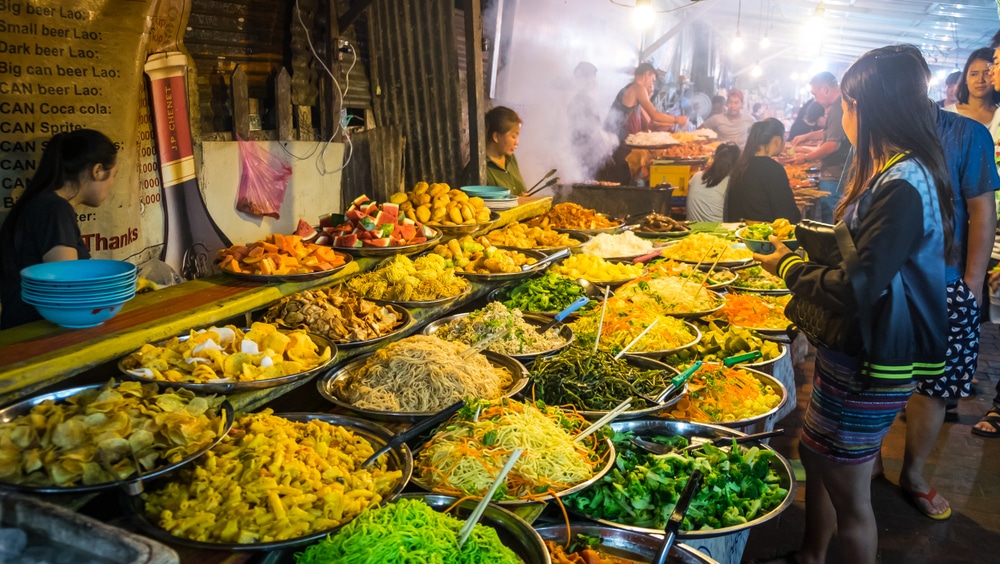
- Eat at the Night Food Stalls

HOW TO GET AROUND LUANG PRABANG
Luang Prabang is a small town and you can get anywhere on foot. Transportation is necessary when you’re visiting places outside of town.
Bicycle – A bicycle is one of the most common ways to get around town. There are plenty of rental shops all over Luang Prabang. Your hostel/hotel may even have some. Rentals are usually between 15,000-30,000 LAK ($1.75-3.45 USD).
Tuk-Tuk – Short tuk-tuk rides around town will cost you around 20,000 LAK ($2.30 USD) per trip. If you’re going a little further afield, like to the slow boat pier, you’ll pay more like 50,000 LAK ($5.75 USD) per trip.
Taxi – The only time you’ll really need a taxi to get around is if you’re traveling to and from the airport. The standard rate for that journey is around 50,000 LAK ($5.75 USD).
WHERE TO STAY IN LUANG PRABANG
Luang Prabang is a city that’s an intoxicating mix of modern conveniences and sleepy, small-town feel. It’s quickly becoming one of the most popular cities in Laos amongst tourists and a fantastic place to base yourself while you’re in the region.
If you’re trying to decide where to stay in Luang Prabang, you’ll be able to explore and enjoy the city and come back to comfortable surroundings at night. You can choose stay at Old Town, Mekong Riverfront, or Nam Khan Riverfront.
LUANG PRABANG WARNINGS AND DANGERS
Luang Prabang is a city located in the northern part of Laos that is popular for its long history and natural beauty. However, there are warnings to be aware of that will help you stay safe and out of danger.
Dangers in the Environment
Throughout the city, there are holes scattered along many of the streets. You’ll want to be careful while you’re walking, since you don’t want to end up falling through one of them. Also, watch where you sit. Some of the larger trees have branches that occasionally break off. This creates a hazard that could get you seriously injured.
Street Peddling
Many children in the city will try and sell you something. However, the minute you buy from one, you’ll find yourself surrounded by many more. While these children aren’t any danger to you, it’s quite easy to find yourself quickly bogged down.
Cash is Still King
The local currency in Laos is Lao kip. Laos has ATMs available, but they are hard to find in Huay Xai, Luang Prabang, Vientiane and Vang Vieng. Keith Hajovsky tells us, “Credit cards can be used in high-end tourist shops, hotels and restaurants – but always carry cash with you to avoid disappointment.”
Luang Prabang features a tropical wet and dry (Aw) under the Koppen climate classification. While the city is generally very warm throughout the year, it is noticeably cooler during December and January. Luang Prabang also experiences wet and dry seasons, with the wet season from April until October, and the dry season during the remaining five months. The city receives approximately 1,450 millimetres (57 in) of precipitation annually.

FOOD & DRINKS
Luang Prabang, located in the northern part of Laos about 340 km north of the capital Vientiane, has its own distinct food culture and dishes.
You’ll find some of the best green papaya salads in the country, a variety of stews that make use of unique Mekong river ingredients (like algae), mind blowing chili dips (jaew), and an abundance of fresh river fish that are made into soups, curries, and one the best dishes – koi (similar to Laotian laap).
Right on the center main street on the historic peninsula of Luang Prabang, you have to choose your restaurants wisely, as there are plenty of watered down Lao food restaurants. But slotted in between, and down alleys, you’ll be rewarded with local northern Lao restaurants that will impress your taste buds