TOP TOURIST ATTRACTIONS OF PAKSE & 4000 ISLANDS
Pakse is the capital of the Champasak province, this charming city is a gateway to the 4000 Islands, Boloven Plateau, numerous national protected areas, the heritage site of Wat Phou, and Champasak. However, the city is more than its colonial buildings, in which one can venture into jungles and bask in nature in the outskirts. With an international airport in the city, this destination is a good way to start or end off your trip!
WHERE TO GO IN PAKSE 4000 ISLANDS:
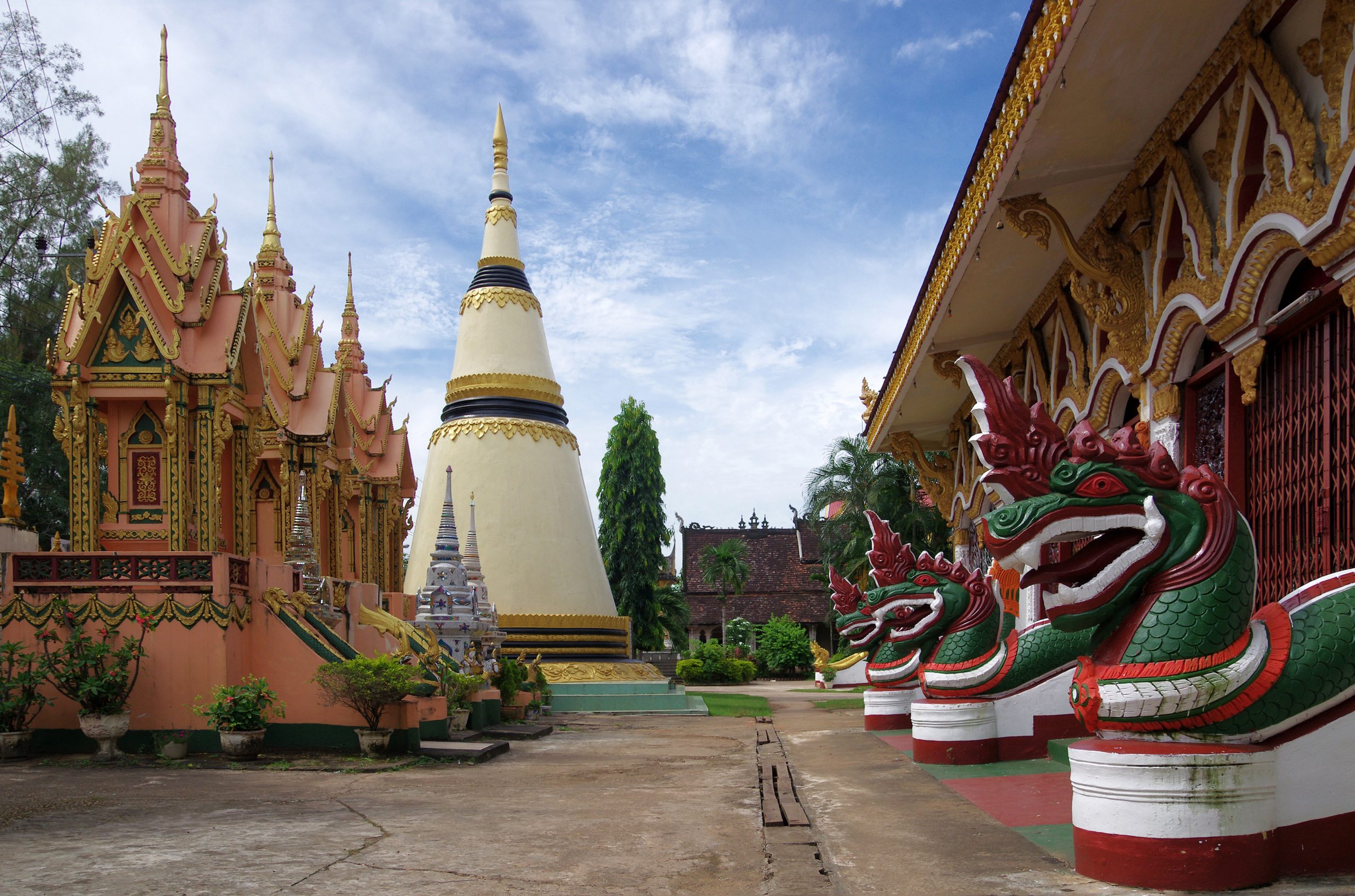
- Wat Luang is said by locals to be the largest and prettiest temple in all of Pakse and is also the home of a number of monks who live on the property. If you want to see the famous Laotian alms giving ceremonies performed by the monks, then this is one of the best places to do so. Another good reason to come here is that this is one of the most beautiful but also less-visited temples in Laos so you won’t have to compete with the crowds.
- Champasak Historical Heritage Museum: Here you will find a number of antiques such as Dong Son drums which are made of bronze and ornate stone carvings that were found at the Bolaven Plateau. There are also pieces from the Khmer kingdom as well as weaponry and even musical instruments. If you are interested in the local jewelry and handicrafts of the ethnic grounds around Pakse such as the Laven, Suay and Visit Wat Phou Salao Nyaheun then you will also find galleries showcasing textile and pieces such as antique earrings.
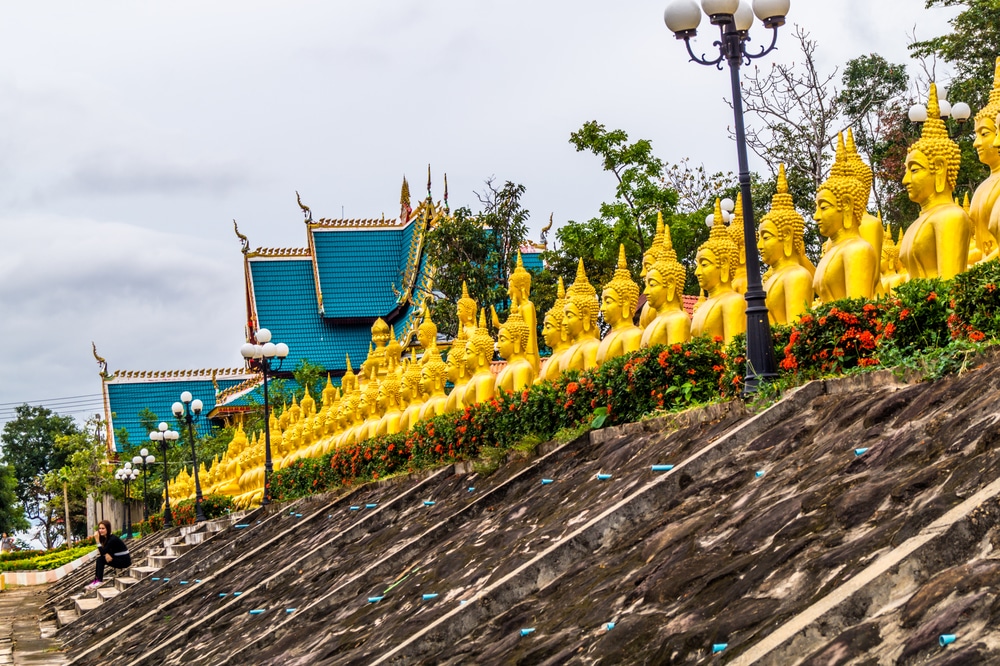
- Wat Phou Salao is a charming temple in a Pakse that is located on a pretty hill that looks out over the Mekong River. The temple has the claim to fame of having a large statue of the Buddha inside and, as you would expect, the best time to come here is around sunset when you can enjoy majestic vistas across the countryside. One thing to note is that you will need to climb up a long and steep staircase to get to the temple so make sure you plan accordingly and wear appropriate footwear.
- Stock up on souvenirs at Dream Weaver If you are looking for some souvenirs in Pakse then look no further than Dream Weaver where you will find a small shop that is part of a local NGO. The store is dedicated to showcasing and selling local textiles which are made using ancient weaving techniques. In addition to the fabric pieces on sale, you will also find some other souvenirs such as carvings. All the proceeds of anything you buy are then funneled back into the local community and many of the pieces are made by victims of human trafficking who have been rescued. As you would expect in Laos, you will find temples scattered all over the countryside. If you are looking for a change of architectural pace however, then you can also visit the Sacred Heart Church which doesn’t look very impressive from the outside but which is actually best known for its interior decorations. Once inside you will find a number of custom paintings such as Jesus visiting different regions in Laos such as the famous Khon Phapheng Falls and Wat Phu Champasak.
- Tour Sacred Heart Church: As you would expect in Laos, you will find temples scattered all over the countryside. If you are looking for a change of architectural pace however, then you can also visit the Sacred Heart Church which doesn’t look very impressive from the outside but which is actually best known for its interior decorations. Once inside you will find a number of custom paintings such as Jesus visiting different regions in Laos such as the famous Khon Phapheng Falls and Wat Phu Champasak.
- Mai Savanh Lao Farm is also called the Silk and Tea Farm and is located in Thateng which is around 10 kilometers outside Pakse. The farm is run by a local NGO and is meant to provide a livelihood for disadvantaged ethnic minorities in the surrounding villages. The farm is covered in aromatic local plants such as lemongrass, pepper and tea plantations and you can also find pineapples and mulberries here. To learn all about the work of the farm and the produce on show, you can take an interesting tour with a local guide.
- Shop at Pakse Souvenirs: Pakse Souvenirs is the place to come if you are interested in local souvenirs, and this shop sells pieces in both the northern and southern styles. The aim of the shop is to create modern pieces which blend traditional patterns and you will find items such as textiles, furniture, carvings and jewelry. One of the great things about the items on sale here is that some are made with recyclable materials such as secondhand linens.
- Stroll along the banks of the Mekong: If you are looking for something to do at night in Pakse then you might want to head to the banks of the Mekong River that runs through town. There is a riverfront promenade here and you will find some local street food stalls as well as a few restaurants that look out over the water. There are also several boat restaurants if you fancy dining on the Mekong itself.
- Eat at Ban Tong Night Market: Ban Tong Night Market is a good place to come if you fancy a bite to eat at night although you won’t be able to eat here as there are no chairs or tables. You can still however get some delicious bites to take away and there are plenty of pretty spots along the river where you can sit and enjoy the local snacks. Bear in mind that most of the food is cooked fresh in front of you so you can just peruse the stalls and pick out what you want to eat based on what looks good on the day.
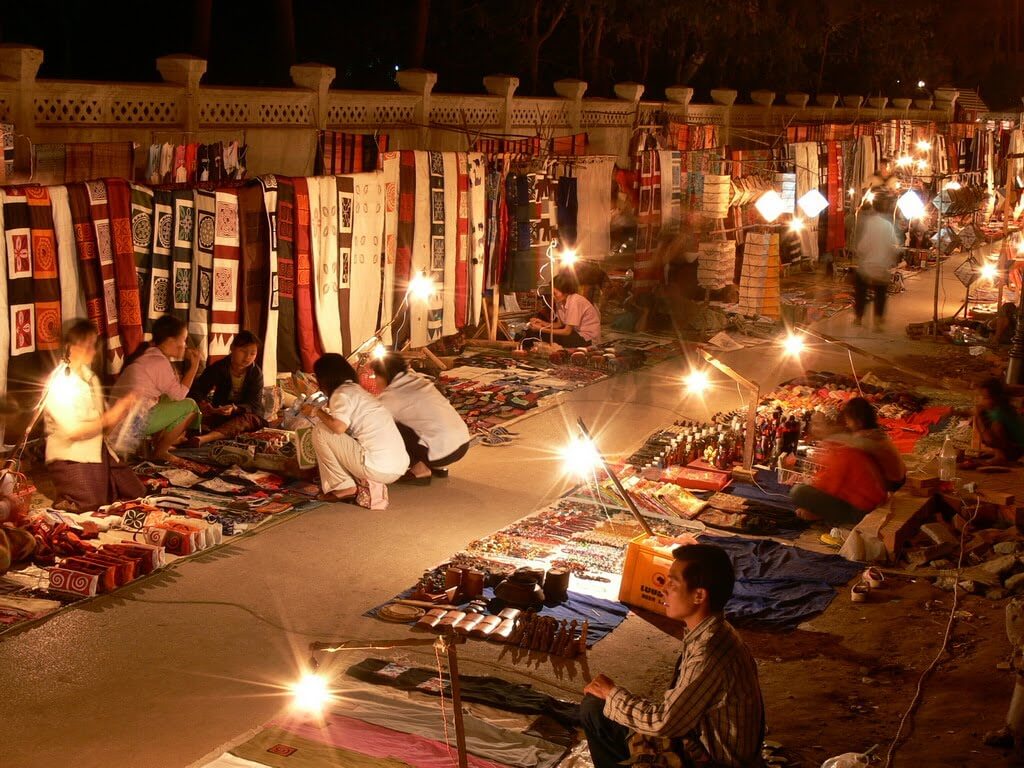
- Shop at Talat Dao Heuang: Talat Dao Heuang is known for being the largest market in town and is located close to the famous Japanese Bridge in Pakse. Not only is it the biggest market of its kind in the city but it is also known for being one of the largest and most varied across the whole of Laos. On a trip here you will find delicious local fruits and vegetables and there are also sections that sell oddities like traditional medicine as well as electronics, clothes and shoes.
- Have a drink on the riverfront: As with many towns and cities in Southeast Asia, the best place to find a sunset drink in Pakse is down by the waterfront. The local tipple in Laos is beer Lao and you will find a number of stalls, cafes and eateries lining the gorgeous Mekong River. To get to this part of town you will need to walk across the delightful French Bridge which affords you pretty views across the river.
- The Bolaven Plateau is, ironically, one of the main reasons that many visitors even find themselves in Pakse. This is also one of the main tourist spots in Laos and is made up of a large plateau that is covered in rivers, majestic jungle and cascading waterfalls. This is also the region of the ethnic Laven group in Laos and you will also find some traditional villages dotted around the area. With that in mind, the best way to end your stay in Pakse is to move on to the Bolaven Plateau and check out all the beauty of this iconic region of
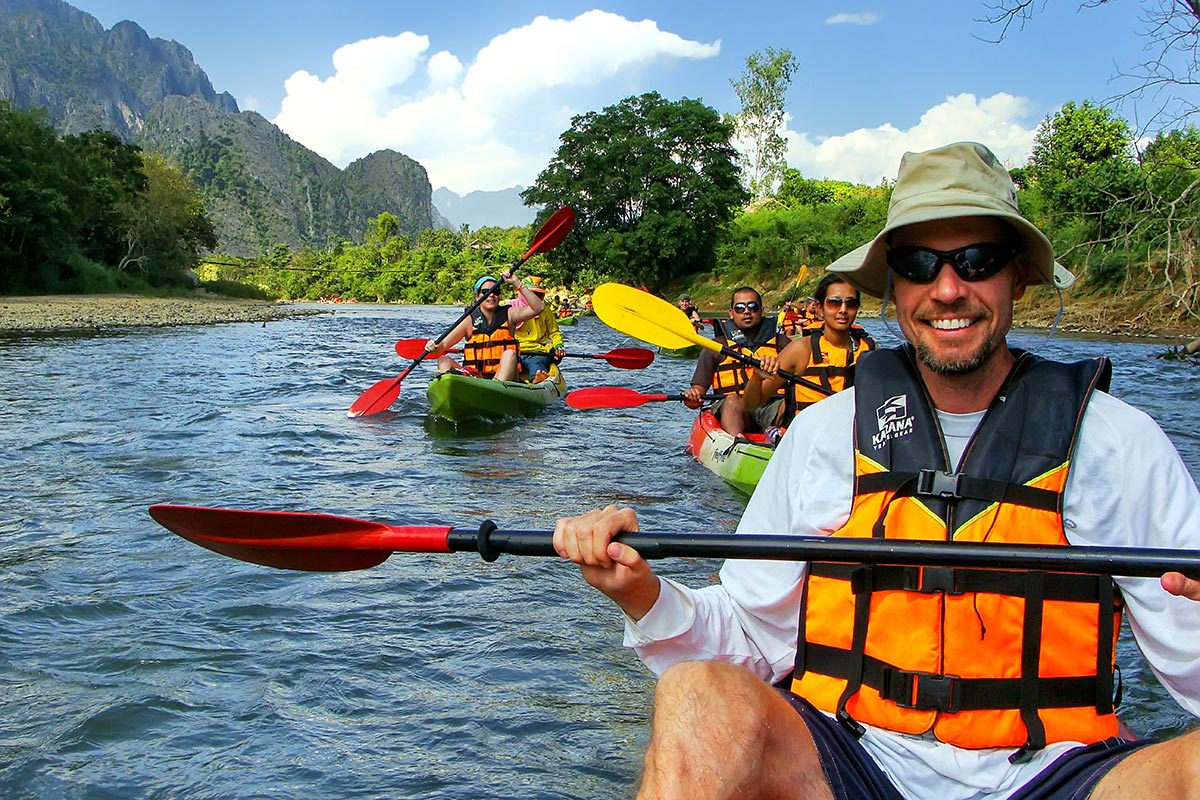
- Go on a Kayaking Trip to see Irrawaddy Dolphins: This is one of the most popular things to do in the 4000 islands and with good reason. Collected from the main street, you are driven out to a section of the river to spend the morning kayaking through impressive scenery with Cambodia on your right and Laos on your left! On a full day kayaking tour you’ll get to explore the hidden waterways of the Mekong, see water buffalo eye to eye cooling off in the shallows, marvel at some beautiful waterfalls (including Li Pi Falls and the largest in South East Asia: Khone Phapheng Falls), and glimpse the elusive and endangered Irrawaddy Dolphins near the Cambodian border
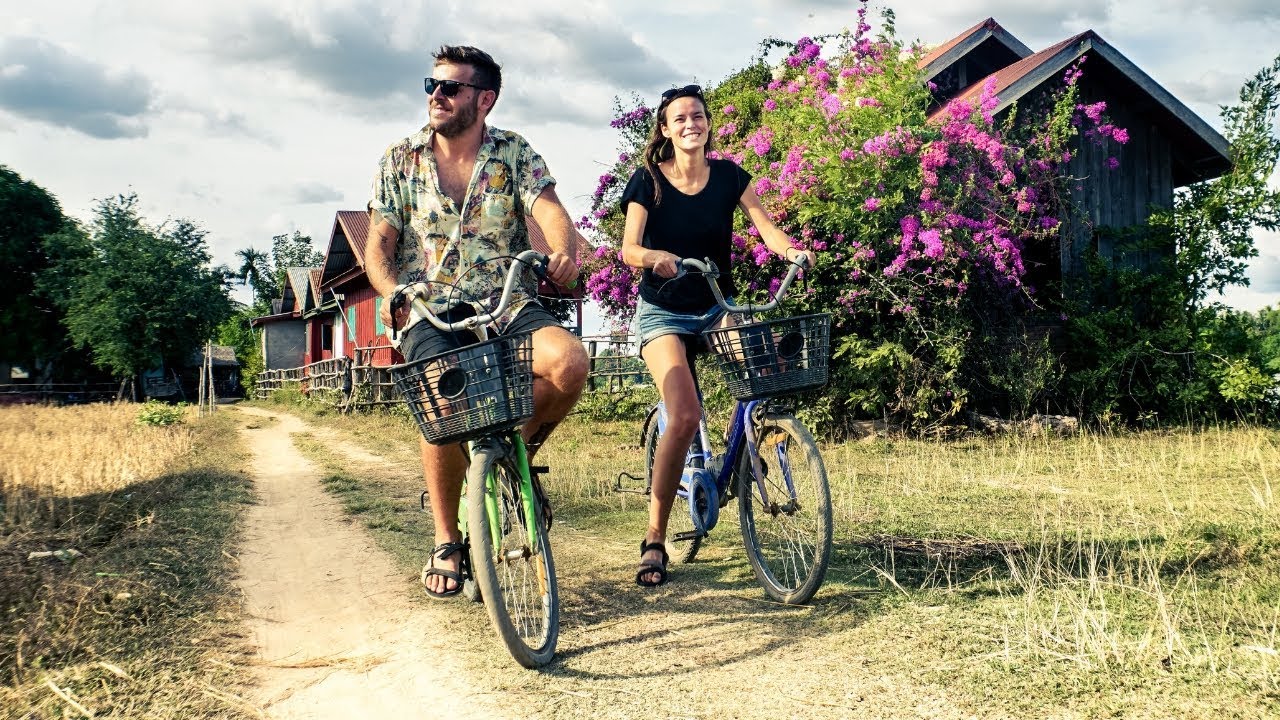
- Rent a Bike and Cycle around Don Det and Don Khone: One of the best ways to spend the day on this laid back island it to rent a bicycle and explore. Bikes can be rented from almost anywhere and only cost 10,000 kip (under £1) for the entire day until 11pm! You’ll find yourself meandering down riverside pathways and palm tree lined lanes, and there’s many a cafe to stop at and have a drink to cool down – we recommend The Garden of Nang (in the south). The mango shakes are incredible and if you buy a drink you can use the beach opposite to have a dip in the river. You can even cycle over the iconic bridge to the neighbouring island of Don Khone, where there are several waterfalls to be explored or you can catch a boat to see the famous Irrawaddy Dolphins near the Cambodian border.
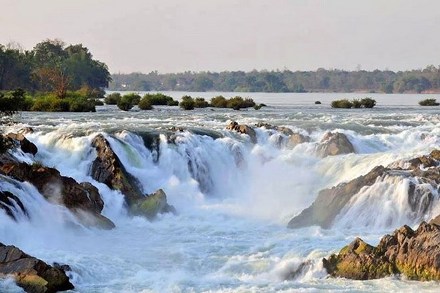
- Visit the Largest Waterfall in Southeast Asia: Over the bridge is Don Khong which provides a home for the largest waterfall in South East Asia, Khone Phapheng Falls (featured image), and it is impressive! You can also find some lovely beaches to relax on before cycling back.
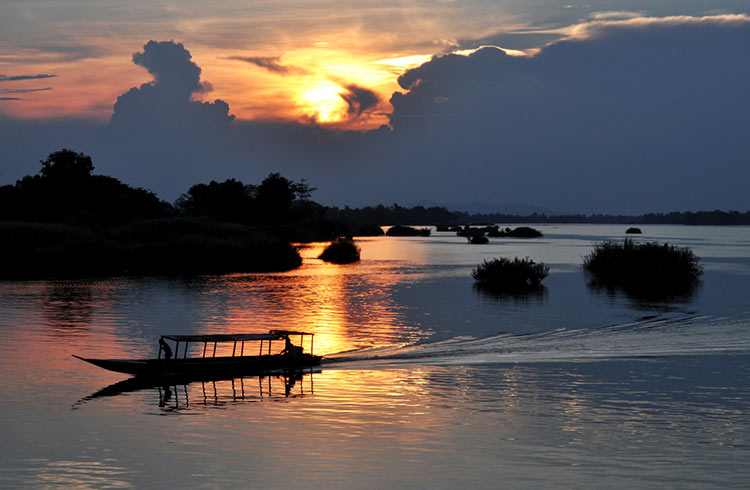
- Watch the Sunset: Don Det is home to some of the best sunsets in South East Asia. Wander down to Souk San Sunset Bungalows (near the ferry drop off point) for the best view, or anywhere on the west side of the island.
THINGS MUST TO DO IN PAKSE
- A day in the city
- Pay a visit to the coffee and tea plantations
- Explore the ancient archeological site of Wat Phou
- Visit the widest waterfall in Southeast Asia
- Have a coffee 200 m high over Tad Fane
- Sleep in a jungle treehouse with Tree Top Explorer
- Enjoy the island life of the 4000 islands
- Weave your way through the 4000 Islands on a boat
HOW TO GET THERE
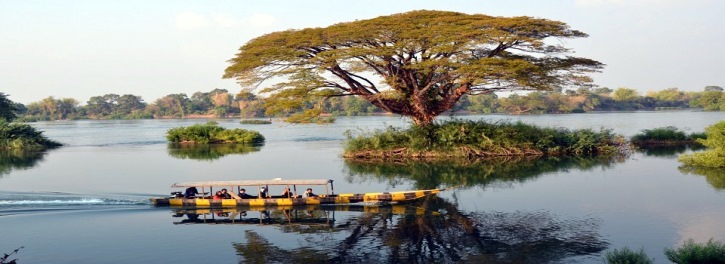
Si Phan Don is on the opposite side of Laos to all the other popular tourist destinations such as Luang Prabang or Vang Vieng, which is also why many travellers skip it. You must take a bus across the country to Pakse and from Pakse there are tourist buses or vans leaving every morning. You can book a bus at any tourist office or hostel in Pakse for around 60,000 kip which also includes a boat to your chosen island.
NOTE: It is also possible to book the entire bus journey from Vientiane – in this case you will take the overnight bus from Vientiane to Pakse, arrive in Pakse around 7am, then take another three-hour van leaving at 8am for the 4000 islands. Be prepared for a very long ride if you don’t since the overnight bus journey is super uncomfortable (like all journeys in Laos are).
ACCOMMODATION ON THE 4000 ISLANDS
From the port follow the road right for guesthouses and hostels with sunset views, or to the left for sunrise (sunrise are slightly cheaper and less of a walk).
The guesthouse we stayed in had no name but its modest and comfortable and at 40,000 LAK (€4) for a bungalow with private bathroom and a large balcony facing Mekong it was an absolute bargain! It had Wi-Fi but only at certain times, and not great at that. You shouldn’t depend on the Wi-Fi on the island. Even if there is some, it won’t always be strong.
Head towards the Street View Cafe bar, down along the main tourist street, and veer to the left at the end. Another 150m or so you will pass Mama Phouwan guesthouses, here rooms are 30,000 LAK (€3) per night (low season) but with no wifi.
Pass Mama Phouwan and up ahead, on the left hand side are white bungalows. Pop into the house facing them and ask for Adrian (a Brit!) he is there until March 2019 and will gladly look after you. Adrian is a total character; he can help you with anything you need and has a few decent stories to tell. We bought his book…
WEATHER IN PAKSE
In Pakse, the wet season is oppressive and overcast, the dry season is muggy and partly cloudy, and it is hot year round.
Based on the tourism score, the best time of year to visit Pakse for warm-weather activities is from late November to early February.
December and January are excellent months to visit southern Laos to enjoy clear skies and comfortable temperatures. However, the wetter summer months are also ideal for those wishing to see the waterfalls of Si Phan Don at their most powerful.
| Months | °C | °F | Rain (mm) | Rain (inches) | Overall Rating |
| January | 14-29 | 57-84 | 10-15 | 0.4-0.5 | ★★★ |
| February | 15-31 | 59-88 | 10-20 | 0.4-0.5 | ★★★ |
| March | 18-33 | 64-91 | 10-30 | 0.4-0.5 | ★★ |
| April | 21-34 | 70-93 | 40-100 | 0.5-4 | ★★ |
| May | 24-34 | 75-93 | 70-150 | 0.7-6 | ★★ |
| June | 25-32 | 77-90 | 90-250 | 4-10 | ★ |
| July | 24-32 | 75-90 | 120-230 | 5-10 | ★ |
| August | 24-32 | 75-90 | 120-300 | 5-12 | ★ |
| September | 23-32 | 73-90 | 100-180 | 4-7 | ★ |
| October | 21-31 | 70-88 | 50-130 | 0.5-6 | ★★★ |
| November | 18-29 | 64-84 | 30-40 | 0.5-0.6 | ★★★ |
| December | 14-26 | 57-79 | 10 | 0.4 | ★★★ |
WHERE TO EAT & DRINK IN PAKSE
Pakse is the business hub for the Bolaven Plateau and not surprising, there’s many cafes to refuel on java. Elegant and understated 124 Thaluang Coffee is a lovely spot to enjoy a cup of coffee and a madeleine. Find it tucked on a side street between Banque Franco-Lao on Road 13 and Vida Bakery.Located on the ground floor of Residence Sisouk Hotel, Sinouk Cafe gives patrons a slice of history with the French colonial building and good coffee—Sinouk is one of the largest coffee brands of Laos.
For a fill of familiar comfort food before striking off into wild, hit up Vida Bakery Cafe where sandwiches, wraps and bagels are made to order (28,000 kip). There’s smoothies, every kind of mocha-frappe-ccino-spresso (10,000-15,000kip), fresh salads, muesli and baked goodies that go down a treat on an overnight bus ride. Find the air-conditioned WiFi-connected cafe off of Route 13. Turn at BFL bank and follow the lane to the end.
Dok Mai Lao is an Italian resto with a simple menu of salads, pastas and a few meat dishes.
Bustling Daolin occupies the corner of the tourist strip and it will satisfy many a hungry visitor with a menu book of mostly Thai and Chinese stir-fry dishes with attractive photos to help decipher. The food is cheap and good, clearly made with a properly hot wok as the veg comes out cooked but still crunchy and flavourful. Get a whole fish prepared the way you like for 60,000 kip or for more modest sizes, there’s fried noodles for 20,000 kip, chicken wings, braised pork belly, morning glory and tofu. Many of the dishes can be made vegetarian.

For sunset, head up to Pakse Hotel’s rooftop restaurant Le Panorama. True to its name, the panoramic views over the rooftops, surrounding hills and the setting sun are terrific. The dinner menu is a safe mix of Lao, Thai and Western fare, dishes starting at 45,000 kip.
Slurp up a decent bowl of Vietnamese style beef pho in front of Lankham Hotel. While it can never compare to the pho found on the streets of Saigon or Hanoi, it does the trick and it’s easy on the wallet.