TOP 12MUST – VISIT DESTINATION IN SAPA
Sapa is home to stunning mountain landscapes, verdant rice terraces, unique stilt villages and Indochina peak, the Fansipan. The most prominent attraction in the town of Sapa is Fansipan, which is the highest mountain in Vietnam and it is only 19km from town. It may seem like a short distance, but the trek is not easy; the rough terrain and unpredictable weather present some difficulties. Tourists who are fit and have mountain climbing experience will enjoy this attraction the most, as the peak is accessible all year round. Technical climbing skills are not necessary, but endurance is a must.1.Ta Phin Village
Over 10 km away from Sa Pa to the northeast in Ta Fin commune, Where is well-known of charming tourists sites and its specific holy significance. Luyen tam monastery was half built from 1942 to 1944. Up till now, it remains a grandiose architectural work within high mountains. This place worships the founder of Ta Fin land where the local people used to organize commemorative rituals and community rally oath-taking ceremonies in spring. Or the brocade co-operative with skilled weaving techniques of Mong and Dao minorities specializes in making famous brocade products which are sold domestically and internationally. Moreover, the brocade weaving craft helps to arouse curiosity and discovery desire of all travelers.
It will be a big mistake if you forget not to visit Ta Fin cave. The rocky bendy road will lead you to the miraculous Ta Fin cave which has a lot of stalactites of different shapes inside such as shapes of fairies in different postures of dancing, bathing, seating and carrying child in their arms, a shape of giant steamed glutinous rice tray with ivory unsmooth mineral pieces like coral, or ivory smooth columns falling down from the top and knitting each other as sapphire sparkling antennas. Drop of water run from mountain peak absorb and stagnate on the top of stalactites, then drip and drum melodiously in vaporous space… Ta Fin is now defined as one of the tourist main points of Sa Pa and comprehensively investing with the aim of bringing about more new things to travelers.

2. Ta Van Village
Ta Van commune in Muong Hoa valley is located in the south and 8 km away from Sapa town ship. Ta Van means “a big turning road” like a basket brim, or tripod-leg line. Vast terrace fields with unique position of a big turning road become a landscape and a destination of Ta Van. Seo Mi Ti scenery-old pine forest, a half day of sloping road away from township center, is also a particularly interesting eco-tourist site of Ta Van. And Ta van has become an integral tourist site for ecological excursions in Sapa.
3. Ancient rocks ground
Arriving in Sapa, it is impossible not to mention the ancient rocks ground in Muong Hoa where is of great “god’s books”. The ancient rocks ground covers on an area of about 8 sq.km and a part of Lao Chai, Ta Van and Hau Thao communes, including 200 large and small stones spreading around Muong Hoa valley. It was discovered in 1925 by a Russian French orientalist Victor Goloubev. Also, scientists have found 159 large rocks with carving shapes, which are the most ancient stone steles in Vietnam.
Lines of strange letters, images of geographical map and battlefield sketch carved on rocks are the ancient people’s hallmarks which are still decoded yet. According to scientists, the ancient rocks ground is a huge fund of knowledge on nature and community life. And the folk legend believed that these were mutual agreements and documents of the ancient civilization.
In 1994, the ancient rocks ground was acknowledged a national-level cultural historical vestige and put in the list of preservation. It is now recommended to the United Nations Educational, Scientific and Cultural Organization – UNESCO to acknowledge the world cultural heritage.
4. Ham Rong Mountain
Via Muong Tien to get to Sapa, in vaporous clouds travelers will see a mountain peak rising as dragon-head. It is Ham Rong Mountain with 100 ha in area. The name of Ham Rong was derived from the legend that, in primitive age there were a couple of dragons which became attached to each other while the deluge was rising high. Walking up, they hurrily separated from each other but failed. They were drifted to different places. After a long time, the female dragon was petrified but still tried to raise its eyes to the male dragon on the Hoang Lien mountain in the west because its instinct for survival remained.
As going to Sa Pa, travelers often climb up Ham Rong mountain to enjoy a cool atmosphere and charming landscapes such as cloud ground and stone garden, gardens, garden of medicinal plants, especially the garden of various orchids and specific houses on stilts of ethnic minorities. A great deal of rocks in shape of dragon claws and fin appear to our eyes and we will think of being lost in a wonderland. Following cliff will lead us to the heaven gate I and II. Standing on the peak, you will enjoy particularly interesting landscapes around as much as you wish and throw your view farer to make the most of poetic beauty of Sapa town looming in clouds.
5. Silver Waterfall
Silver Waterfall is 13 kilometers in the west from Sapa town, Silver waterfall is formed by sources of water from the Lo Sui Tong mountain peak. From the distance, Silver Waterfall looks like a white dragon looking down from the sky. In posture of free fall, a giant Silver Waterfall creates silver steam that will fly up and merge in space to create a both cool and cold feeling. You can reach the Silver water fall by motor bike or by car in half an hour then continue to visit the Tram Ton Pass 3 km away.
6. Market

- Sa Pa Market
- Bac Ha market
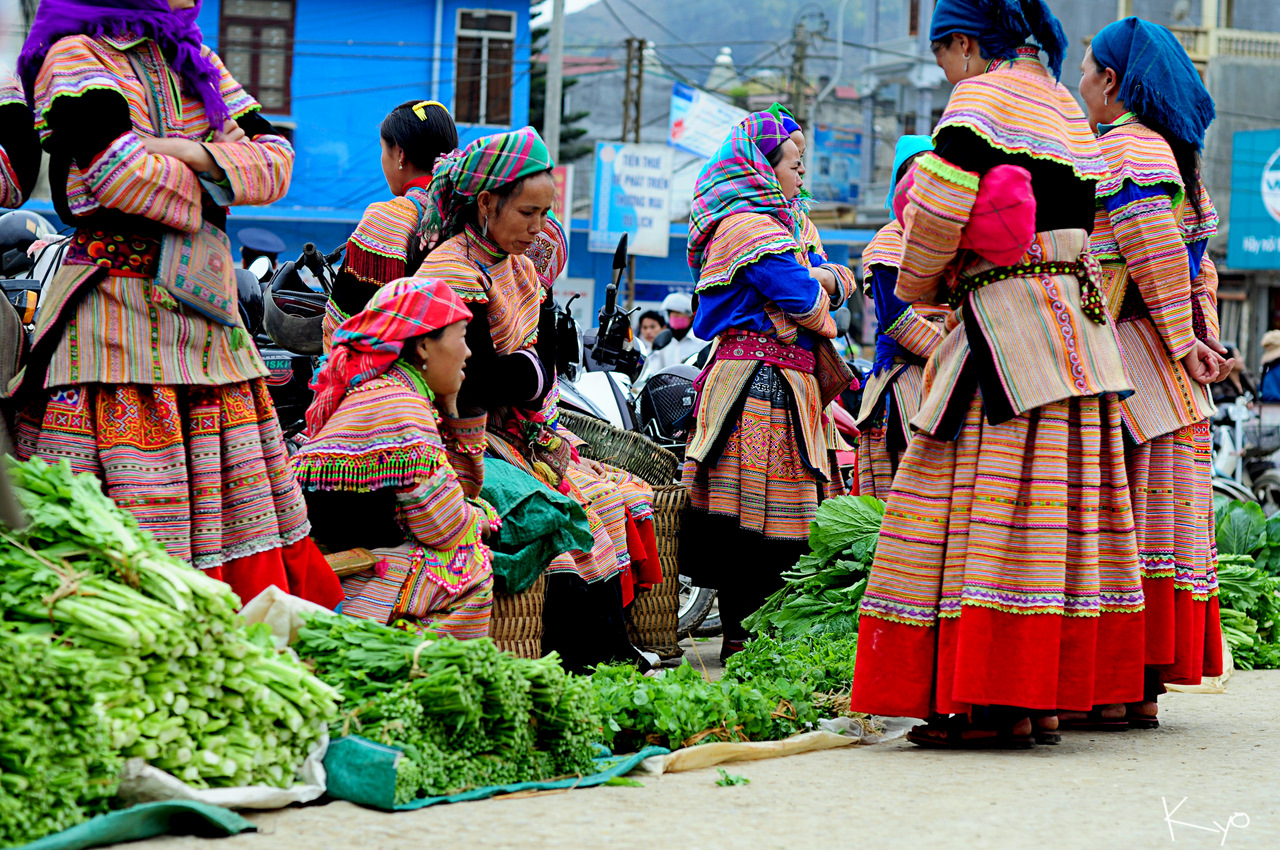
Every Sunday, Bac Ha hosts the biggest fair near the mountainous highlands and the Chinese border. It is the largest and most colourful market in the area and attracts throngs of villagers from the surrounding hill tribes.
Many different ethnic groups such as Flower H’mong, Phu La, Black Dao, Tay and Nung minorities gather to buy and sell local products that cannot be found elsewhere.
- Lung Khau Nhin market
- Cao Son market
- Can Cau market
By 9 am, the market is crammed to capacity. It’s lively and surprisingly fun. The locals are mostly of the Flower Hmong minority group.
7. Cat Cat village
Cat cat village was founded since the 19th century and about 2km away from the center of SaPa town. People are mainly Mong minority and often build houses spaced out dozens meters apart by mountain sides. They grow rice in terrace fields and maize on the mountain according to the handicraft cultivation method.
At present, Cat Cat village is preserving its old architectural monuments such as Pomu timber plank- roofed triple- room houses and many traditional handicrafts such as growing cotton and flax, close weaving and manipulating jewelry. Only with looms, the Mong people have created colorful brocade clothes with patterns of trees, leaves, flowers and animals. Besides this, Cat Cat village expands crafts of dying, printing and embroidering patterns on cloth. The most popular method remains dying in black and vegetable cinders water with forest leaves. Dyed cloth will be shined by rolling with a round section of a tree trunk on flat beeswax- covered rocks.
8. Lao Chai village
6 km far from the center town, you will see Lao Chai village where the black H’mong people are living, it is also the beginning of a valley which is called Muong Hoa valley, here you will enjoy the fresh air, see terrace fields, stream, Visit and discover some of the H’mong’s families.
9. Sin Chai village
Sin Chai village is 40 minutes to walk from Sapa town, you will reach Sin Chai village. There are about 1.400 Black H’mong people are living here. Their houses are scattered on mountain side. Sin Chai people’s life is simple. they earn their living by farming, dying indigo, planting flax, weaving fabric. Their houses are traditional characteristics of the H’mong: wooden building, ground foundation and cooking fire with coal.
10. Ban Ho village
Ban Ho village is 30 kilometers southeast of Sapa town. Ban Ho village is settled by ethnic minorities as Tay, Dao, H’mong… Ban Ho village is one of the most interesting places of Sapa. When coming here, you get chance not only to view wonderful spots, enjoy fresh air but also to see natural beauty. You will have opportunity to see water fall, go swimming in hot water pool or cold water stream, find out traditional weave fabric, make brocade… and take part in community activities.
11. Fansipan Mountain
Location: Fansipan Mountain is located 9km south-west of Sapa Townlet in the Hoang Lien Mountain Range.
Characteristics: Fansipan is branded “the Roof of Indochina” at the height of 3, 143m, Fansipan Mountain is to be approved as one of the very few eco-tourist spots of Vietnam, with about 2, 024 floral varieties and 327 faunal species. The topography of Fansipan is varied. Muong Hoa Valley, at the lowest altitude (950-1, 000m), is created by a narrow strip of land at the base on the east side of the mountain.
Foreigners like best to book Fansipan tours between October and December, as this period is more often than not free from the heavy rains that obstruct the jaunt. But the Vietnamese prefer their tours to the peak of the mountain from February to April, as it is not so cold then. However, the best time for the trek to the mountain is from the end of February to the start of March, when the flowers all flourish and the climbers may behold the.
12.Tram Ton Pass – Sapa
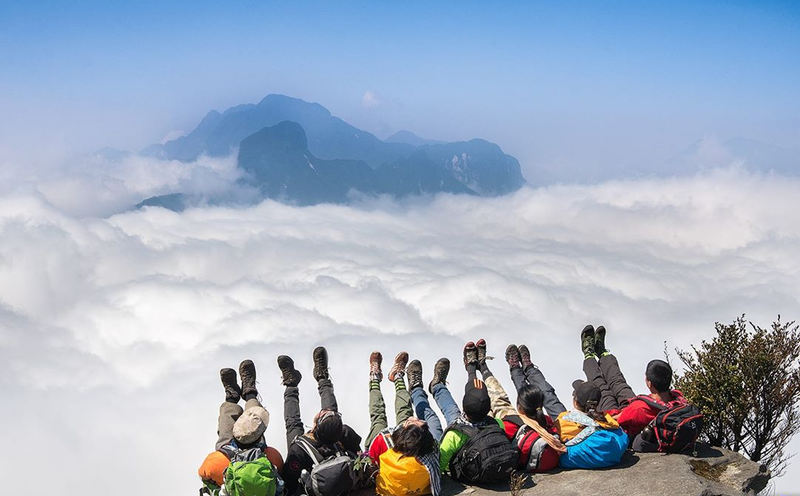
The Pass is often referred to as Heaven Gate, as its picturesque landscapes and magnificence resemble a gate to the Heaven. The road between Sapa and Lai Chau crosses the Tram Ton Pass on the northern side of Fansipan, 15km from Sapa. At 1900m this is Vietnam’s highest mountain pass, and acts as a dividing line between two weather fronts. The lookout points here have fantastic views. Most people also stop at 100m-high Thac Bac (Silver Waterfall), 12km from Sapa.
When reaching the end of Tram Ton Pass, you will be finally at the peak of Hoang Lien Son Mountain, which is called Heaven Gate. It is where you come to understand why Sapa is a must visit place in Vietnam after seeing the massive landscapes covered by the lush foliage and terraced rice paddy fields. What’s more, if you are there on a clear day, you can even see the shining and stunning Thac Bac Waterfall while standing at Heaven Gate. Moreover, Heaven Gate is where you can truly see and feel the majestic grandeur of Mountain Fansipan, which can be a great motivation for you to conquer this high and mighty mountain. One special thing about Tram Ton Pass is how drastic climate change can be. On Sapa side, the weather is cold, foggy and occasionally drizzly. On the other hand, on Lai Chau side, it is getting warmer and you can see the shining blue sky over there. It is not a common experience that you can have in other places in Vietnam.
THINGS YOU SHOULD KNOW BEFORE VISIT SAPA – USEFUL INFORMATION ABOUT SAPA
1.Go on trekking to visit ethnic minority villages
There are plenty villages of minority groups in Sapa, where tourists are now welcome to visit while guided by locals. Trekking to these villages or trekking with locals is the most efficient way to explore the life and beauty of Sapa. It should depend on your need to decide where you should head to.- If you are a nature lover, then you should visit Lao Chai- Ta Van. Trekking to these 2 villages, tourists can witness the stunning beauty of terraced fields, uncapturable by photos. As these are villages of H’Mong ethnic, you can also learn about the life of the H’mong people and their costumes.
- If you are a culture enthusiast, then you should visit Ma Tra- Ta Phin. Here, the locals are willing to show you how brocade is made, or invite you to bathe in the herbal leaves of the Red Dao ethnic people or teach you how to make special dishes.

2. Try local specialties at Sapa Market
Located in the heart of the town, Sapa market is always crowded and filled with ethnic residents come to trade their products. Being famous for handicraft, their most noticeable and signature work is colorful fabrics and products made out of it, like keychains, scarves, bags, beanies, or even shirts. Souvenir from Sapa market is definitely more unique and special comparing to plastic ones you can find in big cities. The market also features special food of these ethnic minority groups, which for adventurous travelers, should be worth a try.
As the market is in the center area, it is also easy to find travel necessities. Tourists can buy North Face jackets and pants (of course, knockoffs), sports shoes, raincoats or any items that you forget to prepare for the trip. If you are going to trekking, make sure you collect everything you need while being in town before going on the adventure.
3. Photograph yourself in the middle of the rice terrace
A unique technique in agriculture. Massive rice fields like this are what Sapa so famous for. Visitors can find peaceful, lovely and harmonious nature in the endless green landscape of these rice terraces.

4. Take a night train to Lao Cai Province
This is not a “Thing to do in Sapa”, however, it would be a nice start to your trip. In order to get to Sapa, tourists have to take a train or bus from Hanoi to Lao Cai province. Buses are a faster option (~ 6 hours), while trains take nearly 9 hours. However, most people rate the trains as more fun. The trains always run through the night and tourists will arrive in Lao Cai Province early in the morning. If you are going in a group, take the train and buy enough tickets for a whole cabin. You can prepare food and drinks to spend a night having some bonding time with your friends or family on the train. From Lao Cai Province, you will have to take a 1 hour drive to get to Sapa. Since there is only one train to Sapa per day, hotels will normally have pick-up service for their clients every day.
5. Admire the magnificent view of Sapa’s waterfalls
Being considered one of the most impressive natural landscape in Vietnam, Sapa definitely has those waterfalls that would make tourists freeze for seconds.
If you have a chance to be in Sapa, make sure you check out these waterfalls:
- Cat Cat Waterfalls
- Thac Bac Waterfalls
- Love Waterfalls
Some areas around the waterfalls in Sapa are safe to take a swim. However, it really depends on the weather as during fall and winter, Sapa is very cold and it is nearly impossible to get soaked in the water outside.
7. Conquere Fansipan Mountain
As the roof of Indochina, Fansipan is a mountain that all travelers want to conquer at least once. Normally, the climb takes 2D1N or 3D2N for people who want to take it slow and cannot climb intensively. The climb is not an easy and smooth route, therefore, getting local help is definitely a good choice.
8. Spend a night in a Sapa local homestay
Homestay is a must-try experience for visitors to this beautiful highland. This is normally included in trekking tours, or tours to visit ethnic minority villages. Staying with locals is an extensively different and unique experience as these people carry a significantly special and distinctive culture. These people live their lives away from the modern world, and maintain their culture separately from the world outside their groups. Despite the huge difference, they are lovely people who offer warm hospitality to visitors. They are normally very enthusiastic about showing tourists their life, home, work, and nature.
9. Talk to the locals
As most ethnic minority people are poor, you will find both adults and children on the road trying to sell something. Even if you are not interested in making a purchase, there is no point in ignoring them. Ethnic people, in general, are very simple, lovely and open. Most of them speak from broken to understandable English, however, considering that they receive no education at all, the fact that they are at a place to communicate in English with foreigners is always a welcome surprise. The key is they would love to be taught by you, tourists from all over the world. So, instead of ignoring them, you can try to communicate, understand these lovely people, and sometimes, they have gifts for you.
10. Ride a motorbike around Sapa.
Even though most touristy activities take place in the center of the town, it would be nice to explore the surroundings of it. There are several local markets that are very popular amongst locals
Bac Ha Market: Located 70 kilometers from Sapa town. This market is known as the largest and the most colorful market in the Northwest region.
Muong Hum Market: Only takes place on Sunday, the market is in Bat Xat District. It is a very busy and exciting market as people from ethnic groups gather here for trading.

WEATHER , TOURIST SEASONS IN SAPA
Sapa is located on 1,600 metres above sea level, and therefore is mostly cool (mean annual temperature 15 to 18°C) and in winter there is light snow. At the same time, the weather here is special: one day you can feel the change of four seasons.
- Morning and afternoon is also cool, as in spring and autumn.
- In the afternoon it’s Sunny and cloudless as summer while at night it gets cold. Going to Sapa, don’t forget to bring warm clothes, even if you go there in the summer.
- The dry season in Sapa – from January to June. In the winter months, cold, the temperature drops to zero and may even snow. The humidity is high and are constantly fogs (160 days a year). Summer is considered the rainy season.
- However, a visit to Sapa should be tied not to the weather (you sunbathe here at any time of the year is not possible), and by the time of harvest of rice. Best time to visit Sapa before or during the harvest in September-November or in the spring. Winter and summer here, unfortunately, the weather is not particularly favorable. Often in summer, especially in August, rains fall, and splendid landscapes are hidden. Winter (November to February) are cold and always foggy, and rice terraces brown and barren.
Seasons in Sapa months

12 MUST -EAT DISHES IN SAPA THAT YOU SHOULD NOT MISS
Sapa is very famous for the natural beauty of forest and mountains and the cold atmosphere. Beside, Sapa is popular with many delicious and unique dishes, which feature the flavor of the Northwestern region. In this post, we will share you top must-eat dishes in Sapa that you should not miss when traveling here.1.Com lam (Sticky rice cooked in bamboo)
Sticky rice cooked in bamboo is the featured dish of the ethnic groups in the Northwest of Vietnam. The main ingredient of this dish is sticky rice, which is cooked in a bamboo steam. When the dish is well-cooked, the burnt bamboo steam outside will be removed. “Com lam” is very popular and is a favorite dish of the locals and tourists, thanks to the delicious taste of the sticky rice, the fragrance of bamboo and the harmonious combination of rice, stream water and bamboo.

2. Thang Co
Thang Co is a featured dish of Mong people. You can easily find this dish in their villages and markets. The main ingredient of Thang Co Sapa is the horse. A serving of this dish usually includes the horse’s meat, heart, liver, innards and blood and 12 kinds of spices such as Amomum tsao-ko, cinnamon, lemon grass, ginger, other special spices and especially, “thang co” is the last spice. When eating, the broth and sliced horse meat are added to the pot. Thang Co is usually served with many kinds of vegetables such as “cai meo”, “cai lau”, turnip cabbage, etc. Especially, Thang Co tastes best when being served with corn wine- the fragrant wine of the highland region. The harmonious combination of Thang Co and corn wine brings an unforgettable and pleasant taste. Br>

3. Seven-color sticky rice
Seven-color sticky rice is a traditional dish of Nung people in Muong Khuong district, Lao Cai province. The seven colors of this dish are pink, light red, dark red, indigo, yellow-green, green and yellow. The colors of sticky rice are made of different kinds of leaves in the forest. The people here believe that eating the seven-color sticky rice on special and important occasions will bring good luck.

4. Grilled pork
Grilled pork with Indian pepper is a must-eat dish when travelling to Sapa. The pork is marinated in India pepper and grilled on the hot stove. The softness and featured taste of the dish will be an unforgettable experience for diners.

5. Grilled fish
This simple dish is incredibly delicious, and it is a pity if you travel to Sapa without trying the grilled fish. Sapa has many kinds of fishes, and their flavors are different from other fishes. The goby fish, bighead carp, etc. are usually found in the stream of Sapa. Almost of them are not so big, just as big as your fingers. When completing the catching fish process, you just need to make a fire to grill the fishes or cook them with some kinds of species to have an attractive dish. The sweetness and freshness of this dish are irresistible to any diners.
6. Grilled Black-Bone Silky Fowl with honey
The Black-Bone Silky Fowls of Sapa are raised on the hills and fields. Thus, their meat is very delicious. The Black-Bone Silky Fowl grilled with honey, mint and served with pepper, salt and lemon is such a tasty dish that you must try once.
7. Salmon hot pot
Unlike the greasy imported salmon, salmon raised in Sapa is high in nutrition and less greasy. People process it in many different ways to create delicious dishes such as salmon salads, grilled salmon, sashimi, salmon cooked with curry. However, salmon hot pot is the most favorite dish of many diners.
8. Grilled food
At night, the cold atmosphere covers the whole town. And nothing is better than sitting near the cozy fireplace and enjoying hot grilled food. The fragrant from the tasty BBQ has such a strong attraction to whet your appetite.

9. Cai meo Sapa
Cai meo, which is a popular vegetable of Sapa, is processed in various ways to create different dishes. The locals usually stir-fry, cook, and boil the cai meo or serve it with the hot pot. In general, the simplest way to process this kind of vegetables is to slice it into small pieces, mix it with ginger and boil them together to have a nutritious soup. This soup is often served with wine.

10. Smoked meat
when visiting the houses of H’Mong people in their villages, you can see many pieces of meat gathered on a tray. The meat comes from the horse, buffalo, and pig and they are smoked to store. This method of storing food can keep the food usable up to a few years. When eating, the meat is carefully washed and fried with tomato, and bamboo sprout. The dish will have a unique fragrance and featured taste when it is done.
11. Pig “theft armpit”
You can easily see the locals theft the pig in their armpit at the market, and this is also the origin of the pig “theft armpit.” The pig is a localized breed. The locals let the baby pigs grow up naturally, and after one year, when they are more than 20 kilograms, they will be sold for meat. The pig “theft armpit” is so famous that many restaurants use it to cook many delicious dishes. The soft, sweet and less greasy meat, as well as the crunchy skin, is the principal feature of the dish. Pig “theft armpit” is usually marinated carefully in many kinds of spices and served with wine. You will fall in love with this dish at first sight!

12. Black-Bone Silky Fowl
The Black-Bone Silky Fowl of Mong people is very special because its bone and meat are in black. The crunchy skin and the black chicken meat offer such a refreshing taste. The scientists have proven that eating black-bone silky fowl can help you increase your sexual ability and treat heart diseases. The most famous dish processed from the Black-Bone Silky Fowl is grilled Black-Bone Silky Fowl with honey. The delicious and excellent taste of this dish will surely meet your need.